How Should Machined Datums and Threads Be Masked Before Powder Coating?
How Should Machined Datums and Threads Be Masked Before Powder Coating?
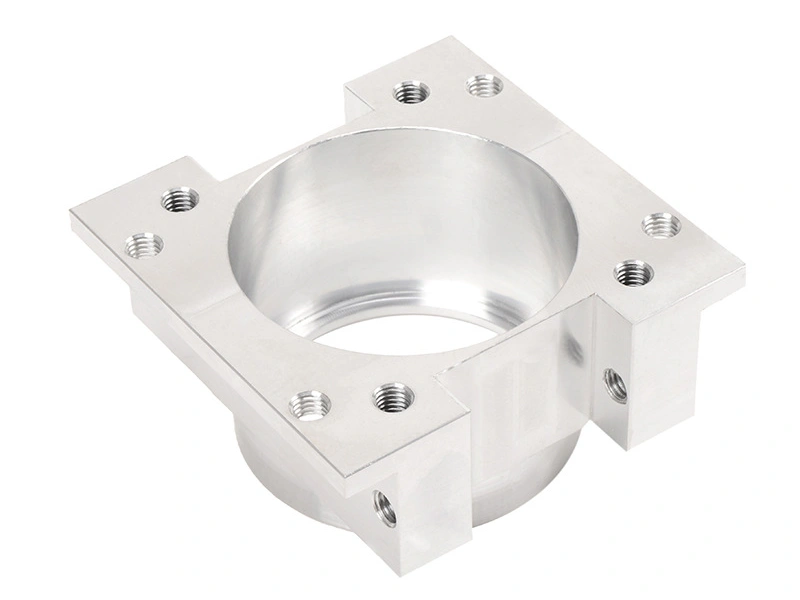
Machined datums and threads should be masked by mapping every keep-clear feature, defining the permitted coating edge, selecting a mask that survives preparation and cure, and verifying the feature after the mask is removed. A generic “mask holes” note does not state how deep a bore must remain clear, where overspray may land, or whether post-cure cleanup is allowed. The buyer should provide the drawing revision, thread or fit requirement, datum function, coating state, cure condition, inspection method, and reaction for an interference or damaged edge. A light-colored coated bracket can show visible coverage from two views, but a photograph cannot prove a hidden mask boundary, thread fit, or datum location.
Map the Functional Features
Mark threaded holes, bores, press fits, sealing lands, locating pads, grounding contacts, drain paths, and inspection datums on the drawing or a controlled mask map. Separate features that must remain completely bare from those that can accept a reduced film or a defined overspray. State whether the feature is used during assembly, inspection, electrical contact, fluid flow, or alignment. A mounting hole may tolerate a small edge feather while a locating bore may not. The map should identify the surface, depth, edge, and function instead of relying on a general note.
Define Thread and Bore Protection
For internal threads, specify the required clear length, lead-in condition, crest protection, and whether powder may remain beyond a relief or at the blind-hole bottom. For external threads, identify the protected length, runout, and permissible edge transition. A plug, cap, tape, or liquid mask can each leave a different boundary. State whether a mating part, ring gauge, plug gauge, or dimensional method controls acceptance after cure. A gauge can reveal interference under its own condition, but it does not prove that the mask was centered or that the entire thread form is free of coating.
Protect Datum and Seating Surfaces
Identify primary and secondary datums, flat seating faces, locating pins, and clamp contact areas that must remain stable through coating. A thin powder layer or rack witness can change seating, tilt a fixture, or shift a measured relationship. State whether the datum is protected by a mask, by a removable fixture, or by a post-coat machining operation. If post-coat cleanup is allowed, specify the maximum removal and the reinspection of flatness, location, edge break, and adjacent coating.
Do not assume that a bare pad remains clean after blasting, handling, and cure. Preparation media, adhesive residue, or a mask edge can alter contact even when the pad looks bare. Define the cleaning and visual check, and record the condition in which the datum is accepted. A fixturing reference can help discuss support and access, but the controlled drawing sets the datum requirement.
Select a Mask for the Process Window
Choose mask materials and fixtures for the preparation chemistry, spray exposure, oven temperature, dwell time, and removal method. Tape can lift at an edge, liquid mask can bridge a small hole, and a rigid plug can leave a shadow or prevent complete coverage. State whether masks are single-use, cleaned for reuse, or identified by a controlled part number. A reusable plug that carries old powder or residue can change the boundary on a later lot.
Test the mask on the actual geometry when a feature is deep, thin, threaded, or close to a cosmetic face. Check insertion force, removal force, edge seal, thermal expansion, and residue. A process trial should be linked to the part revision and the powder/cure state; it is not a universal approval for other materials or feature sizes.
Plan Rack Contact Separately
Rack and hook contact is an intentional interruption of coating. Mark the allowed contact region, electrical or grounding role, visual class, and maximum witness. A hook on a seating pad can create a dimensional problem; a contact on a hidden rear face may be acceptable. State orientation during spray and cure, contact count, and how the operator verifies that the bracket is stable without covering a required face.
Set the Overspray Boundary
State the permitted overspray distance, feather, powder buildup, and cleanup at each masked feature. One global tolerance can be unsafe when a thread, bore, and cosmetic edge have different functions. If overspray is removed with a scraper, abrasive, or tap, define where it may be used and how much material may be removed. A cleanup operation can damage a crest, enlarge a hole, or expose unprepared substrate.
Inspect the boundary with the feature in the same state used for release. A visual check can locate powder, while a gauge or coordinate method can address fit or position. Keep both observations when they answer different questions. If an inaccessible shoulder cannot be viewed, state the limitation and use a validated plug, borescope, witness, or functional check within scope.
Verify Before and After Cure
Check the mask placement before spray and the cleared feature after cure and removal. Before spraying, confirm part identity, mask map revision, plug depth, tape coverage, and rack contact. After cure, confirm that the mask was removed, no residue remains, the coating edge is within its boundary, and the feature still meets its functional requirement. Record temperature, support, operator, instrument, and unit or lot identity when they influence the result.
If a mask fails during spray or cure, contain the affected range and preserve the original observation. Do not report only a cleaned and retested pass. Rework, replacement, expanded inspection, deviation, or a new trial should be selected according to the feature risk and recorded with an approver.
Put the Mask Plan in the RFQ
Provide the drawing and model revisions, mask map, feature function, clear-depth or edge limits, powder and cure reference, rack plan, preparation boundary, inspection method, sample basis, cleanup rule, packaging, and change authority. Ask suppliers to state their mask material, reusable-tool controls, overspray assumption, first-piece evidence, and reaction to a blocked thread or datum. A metal-finishing reference can organize the process questions, but it does not define the part's keep-clear dimensions.
Approve a Bounded Mask Definition
Approve the mask plan when every functional feature has a boundary, method, state, owner, and reaction, and when rack contact and cleanup are visible in the acceptance record. Hold when “mask holes” is the only instruction, a blind feature has no access method, a datum is judged by appearance, or the post-cure check is omitted. The buyer's next action is to sign the mask map against the active drawing revision before coating production parts.