How Should Demand Learning Differ From Process Validation?
How Should Demand Learning Differ From Process Validation?
Demand learning and process validation are different decisions, even when they use the same small CNC batch. Demand learning asks whether a market, customer, or program will request a quantity at a timing and price. Process validation asks whether a defined part can be made and accepted under a controlled material, setup, inspection, and delivery state. A good batch can answer one question while leaving the other open. The buyer should label the purpose before production and keep the evidence streams separate.
Write Two Explicit Hypotheses
A demand hypothesis might state an expected quantity range, order timing, configuration options, customer commitment, and confidence boundary. A process hypothesis might state the drawing revision, material condition, feature access, workholding, inspection method, and acceptance limits. Avoid blending them into “the parts worked.” That phrase does not say whether the process was repeatable or whether another order exists.
Assign an owner and a decision date to each hypothesis. Engineering may own fit and measurement, while a program or purchasing team owns forecast and commercial response. Both owners need the same unit identity but different evidence fields. This simple separation prevents a successful demonstration from being treated as a production contract or a sales signal from being treated as capability proof.
Bound Process Validation
Process validation is bounded by the state in which the batch was made. Record part and model revisions, material and heat or lot identity, stock form, fixture and jaw condition, machine or program version, tool state, coolant, inspection method, outside processing, cleaning, packaging, and affected units. If any of those change, decide whether the result transfers, needs a focused check, or requires another trial.
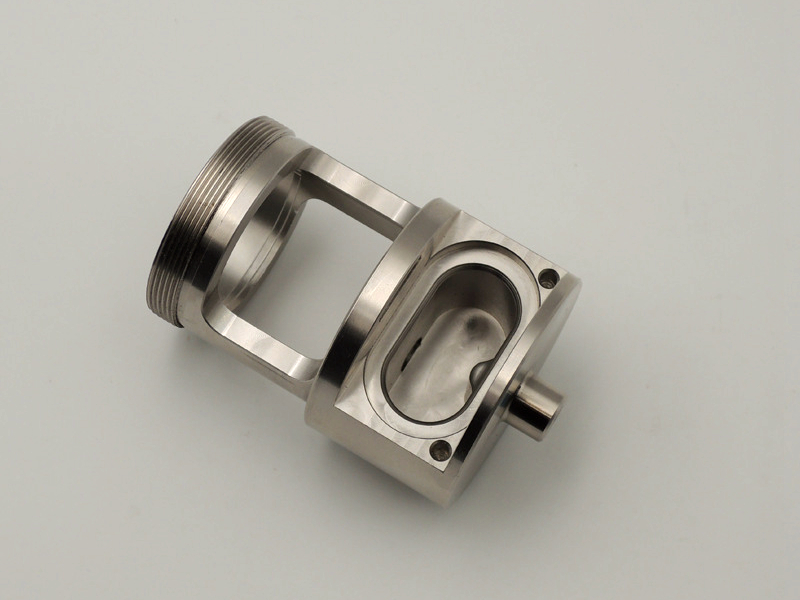
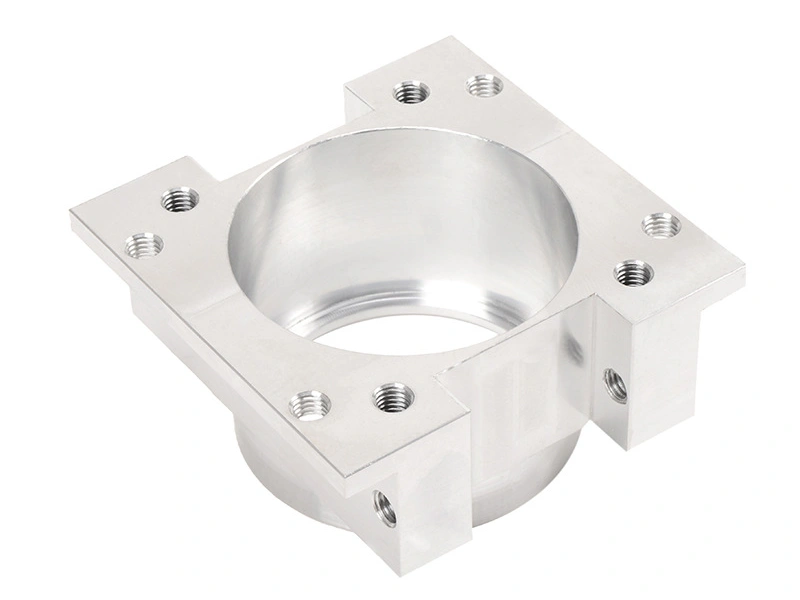
For the round insert shown in the paired images, validation may examine the central opening, stepped face, outer profile, edge condition, and their datum relationships. The images show geometry and viewing angle only; they do not establish alloy, hardness, tolerance, or application. Use the controlled drawing, setup record, and unit-linked inspection values to support a process conclusion.
Collect Demand Evidence Separately
Demand evidence can include a signed forecast, purchase order, customer-approved sample, configuration request, response time, target quantity, or documented reason for postponement. It should identify the assumption and its expiration. A verbal interest statement may support exploration but does not equal a committed order. Record cancellations, quantity changes, and timing changes without rewriting the original hypothesis.
Do not infer demand from manufacturing efficiency. A low setup cost or a clean inspection report may improve the offer, but it cannot prove a buyer will order. Conversely, a strong commercial signal does not prove that a tight relationship, surface, or post-process state can be held. Keep the commercial record in its own decision log and cite the manufacturing evidence only where it changes feasibility or price scope.
Design the Batch to Learn Without Confusion
Choose a quantity and sequence that expose the intended risk. If the goal is fit, include representative mating hardware and assembly conditions. If the goal is setup repeatability, include multiple units across the setup and record any reversal or tool change. If the goal is demand, use a configuration and packaging state that a real buyer can evaluate. Do not change material, geometry, and inspection coverage at once unless the purpose is to explore their combined effect.
Mark exploratory units and released units distinctly. An exploratory unit can inform a design choice while remaining unsuitable for a shipment claim. A released unit must meet the approved acceptance plan. If the same part is used for both purposes, record which measurements support release and which observations are only learning. This preserves honest boundaries when results are summarized for management or a future supplier.
Compare Results by State
Compare process results only when revision, material, setup, inspection, and delivered state are equivalent. A change in fixture, tool, cleaning, coating, or datum can create a new population. Keep the states in separate rows or lots instead of averaging them into an attractive number. Note sample size, failed units, rework, and inaccessible characteristics. A small sample can reveal a failure mode or an improvement, but it rarely proves long-term behavior without additional evidence.
For demand, compare the forecast with actual inquiries, orders, accepted quantity, timing, and configuration. Record why a lead was won, delayed, or lost without converting a single event into a general market claim. A repeat order is stronger evidence than a request for a free sample, but it still does not validate an unchanged process if the specification or delivery state moved.
Use Separate Gates
Set a process gate for drawing compliance, critical-feature evidence, setup traceability, reaction to failures, and delivered-state checks. Set a demand gate for buyer commitment, quantity, timing, configuration, price scope, and owner approval. A batch can pass the process gate and remain in market learning, or pass the demand gate while requiring a new process trial. Write both outcomes on the same package summary so neither is mistaken for the other.
When a gate fails, state the next action. Process failure may require containment, a fixture change, expanded inspection, or a revised trial. Demand uncertainty may require a customer sample, a configuration discussion, or a forecast update. Do not “fix” a failed gate by deleting a unit, changing the hypothesis, or hiding setup effort in a unit price.
Tell Suppliers Which Learning You Need
In the RFQ, state whether the batch is for design fit, process learning, early demand, or a released shipment. Provide drawing and model revisions, material, quantity, critical features, inspection, outside processing, packaging, milestones, and the evidence format. Ask suppliers to identify assumptions that would change at a repeat quantity. This lets a supplier propose a route and records that answer the intended question without promising a capability beyond the stated state.
Make the Next Decision Traceable
Keep the batch when each hypothesis has a result, boundary, owner, and next action. Hold the conclusion when process state is mixed, demand evidence is anecdotal, a critical feature is inaccessible, or rework erased the original signal. The buyer's next step is to approve two short decision statements—one for process validation and one for demand learning—then link each to the units and records that actually support it.