How Should Custom Precision Manufacturing Changes Be Approved?
How Should Custom Precision Manufacturing Changes Be Approved?
Custom precision changes should be approved through a traceable review that identifies the affected feature, reason for change, new material, tool, fixture, program, processor, inspection method, or packaging, and the evidence needed before production resumes. Approval should compare the change with the controlled drawing, datum frame, CTQ list, measurement state, and delivery risk. A supplier may propose an alternative, but the buyer should not treat an undocumented substitution as harmless because the finished part looks similar.
Classify the Change
Classify changes by what they can move: geometry, material state, surface condition, inspection evidence, configuration, or logistics. A new cutter can change burrs, heat, and wall deflection. A fixture replacement can change datum transfer. An outside processor can change coating growth or cleanliness. A packaging change can damage a finished edge without changing machining results.
Record the affected drawing revision, route step, part family, lot, and owner. If the change is temporary, state its start and end conditions. If it becomes permanent, update the approved process and associated records through the configuration path defined by the quality agreement.
Review Risk and Evidence
For each affected CTQ, decide whether document review, fixture qualification, first-piece inspection, expanded sampling, functional testing, or full requalification is required. A change that does not touch a datum or critical surface may need less evidence than a new locating contact. The decision should be based on the characteristic and failure consequence, not on the convenience of repeating a familiar checklist.
State the acceptance rule before collecting results. If a measurement method changes, compare what the old and new methods prove. A CMM alignment, gauge fit, visual check, or material certificate has a defined boundary; one cannot silently replace another without approval.
Protect Configuration and Traceability
Link the approved change to drawing revision, model, program, fixture, tool list, material lot, outside processor, inspection plan, labels, and shipment records. Retain superseded records so a receiving team can determine which configuration produced each unit. If rework occurs, preserve original and final results with the disposition authority.
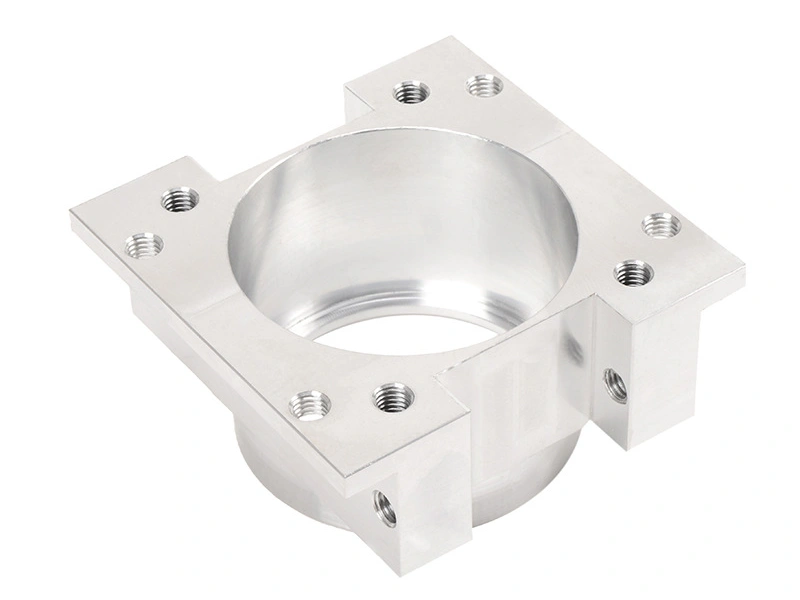
For a two-piece clamp assembly, identify whether a change affects the base, block, fastener condition, or assembled relationship. The pictured geometry does not establish a function, so any proposed change should point back to the assembly requirement and drawing rather than to visual similarity.
Set Hold and Resume Rules
Define when production stops: missing approval, wrong revision, unqualified fixture, unverified material substitution, unavailable inspection access, or an outside-process result outside the agreed condition. Define who can release the hold and which evidence is required. Do not ship a lot while a change record is open if the affected characteristic cannot be shown conforming.
When the change is approved, identify the first lot or unit that uses it and require the specified recheck. A clear resume rule prevents a verbal agreement from becoming an untraceable process state.
Write the Change Clause in the RFQ
Require notification and approval for changes to material, temper, heat treatment, tool, fixture, program, route, processor, inspection method, location, packaging, label, or ownership. State lead time for notification, evidence format, deviation authority, and whether customer approval is needed before production or shipment.
Ask candidates to provide an anonymized change form or route example. Compare whether each response identifies affected CTQs, evidence, configuration, and hold rules. This is more informative than a general promise that the process is controlled.
A useful change form also records the effective date, affected serial or lot range, old and new values, responsible approver, and the verification result. If the change is rejected, preserve that decision so a later reviewer does not mistake an abandoned proposal for an approved route. If the change is urgent, define the temporary containment, expiry date, and retrospective review rather than relying on an email chain.
For outside processing, identify who owns the processor qualification and how the delivered condition is sampled. A new coating batch, cleaning chemistry, or packaging supplier can alter a critical surface without changing the machining program. The release gate should name the evidence required after that step and the person authorized to accept a deviation.
Buyer Action
Issue one controlled change request, identify the reason and affected lot, require a risk and evidence review, and record the approval before production resumes. Store the final decision with the drawing and inspection records. Custom precision manufacturing remains reliable when every change has an owner, a boundary, and a measurable release condition.