How Should a Custom Precision Manufacturing Process Be Selected?
How Should a Custom Precision Manufacturing Process Be Selected?
A custom precision process should be selected from the part's functional features, material condition, quantity, access limits, and required evidence rather than from a machine list. Start with the controlled drawing and identify which surfaces locate, seal, guide, fasten, or carry load. Then ask the manufacturer to map each critical feature to an operation, datum frame, inspection method, and acceptance record. The buyer's decision is sound when the proposed route can make the geometry and prove it in the state in which the part will be used. If the drawing does not explain the function, obtain that information before treating any route or price as final.
Classify the Part Requirements
Separate size, location, orientation, form, surface condition, thread fit, and functional performance. A hole diameter controls a different outcome from the position of its axis. A flatness limit does not establish perpendicularity, and a visual finish does not prove a roughness value. Mark each characteristic with its consequence if it drifts. This classification prevents a supplier from spending effort on easy dimensions while a less visible interface remains undefined.
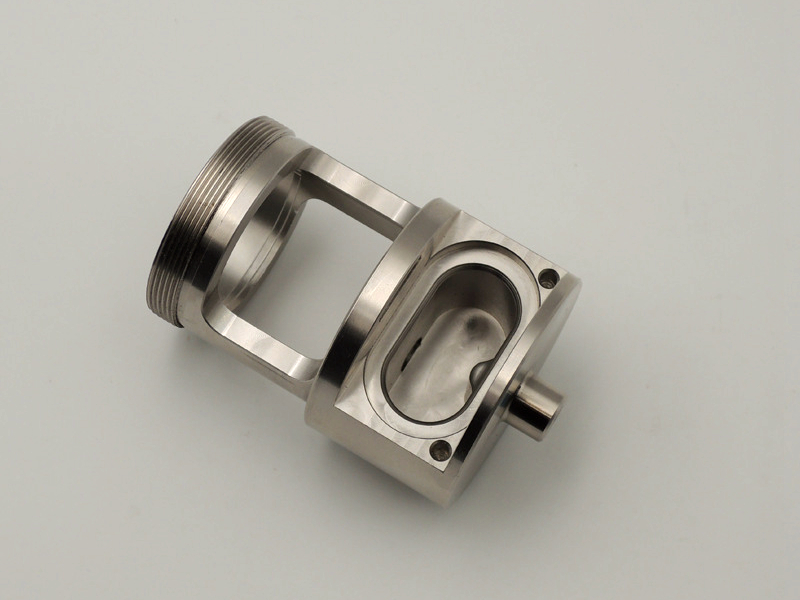
Identify the primary assembly contacts first. A mounting face, locating bore, pin pattern, or shoulder may establish the reference frame. A raw edge that never touches the assembly should not become the primary datum simply because it is convenient to clamp. If a two-piece clamp or bracket is delivered assembled, state which relations are checked on each component and which are checked after assembly.
Match Geometry to a Process Family
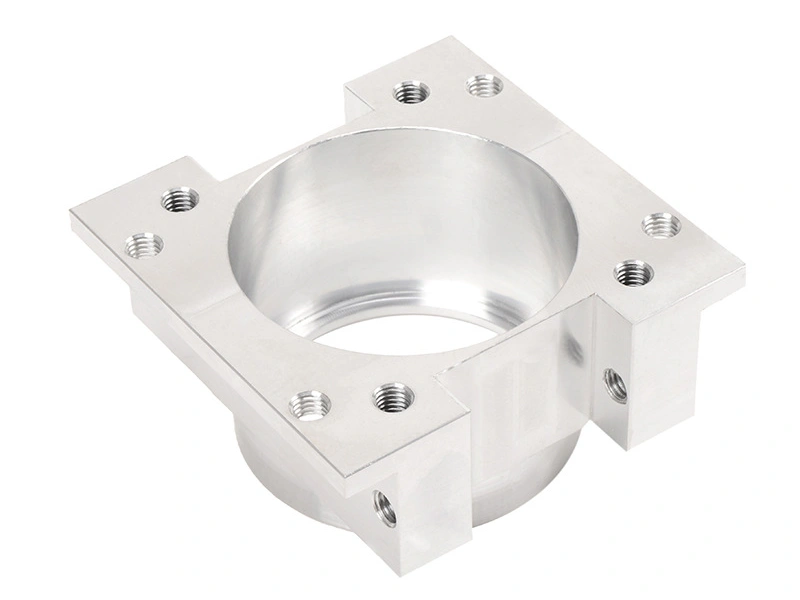
Milling is often suitable for prismatic faces, pockets, bosses, and hole patterns. Turning can be appropriate for rotational interfaces. Boring can refine an internal axis, and grinding can provide a stable final surface when the drawing and allowance support it. A combined route can be better than forcing every feature into one setup. The selection must account for tool access, holder clearance, workholding, chip evacuation, deburring, and inspection reach.
Review roughing and finishing separately. A large cutter may remove stock quickly while a smaller tool is needed for a corner or wall. A long tool may reach depth but increase deflection. A probe may access a face before reorientation and lose that access afterward. Require the route response to state the assumptions for each CTQ, including orientation and support.
Evaluate Material and State Changes
Material grade, temper, heat-treatment condition, stock form, and outside processing influence cutting behavior and dimensional stability. Require the certificate or lot reference where the specification calls for it. State which dimensions are checked before heat treatment, coating, or anodizing and which are checked after. A photograph cannot identify an alloy, hardness, residual stress, or coating thickness, so visual similarity must not substitute for controlled evidence.
Allowance should be tied to the route. Excess stock can increase heat and cutting time; insufficient stock can prevent a datum or cosmetic face from cleaning up. If stress relief or another state change is part of the route, explain where datums are re-established and which measurements are repeated. The supplier should identify any condition that can move the part after unclamping.
Check Fixture and Datum Transfer
For every setup, document locating contacts, supports, clamp direction, orientation, and surfaces intentionally left accessible. A shared feature can verify transfer only when it remains stable and measurable. If a fixture is replaced, identify the requalification check. Thin walls and clamp blocks need support that resists cutting load without hiding a CTQ or distorting the part into a false position.
Ask whether the component is inspected free, supported, clamped, or assembled. A result taken under restraint may not describe the installation condition. For a pictured clamp assembly, clarify whether the base-to-block interface is the functional relation and whether fasteners are part of the supplied assembly. The image can prompt questions, but the drawing and assembly requirement control the answer.
Select Evidence Before Production
For each CTQ, define nominal or limit, actual result, units, datum frame, method or instrument, measurement condition, inspected unit, and record revision. Distinguish 100% checks from samples. A CMM result can describe location and form in a stated alignment; it does not silently prove clamp load, sealing, or another functional test. A gauge can demonstrate fit while leaving position or orientation unresolved.
Include the evidence owner and reaction rule. If a result is missing, uses the wrong revision, or is taken in the wrong state, the lot should be held until an approved disposition exists. A material certificate supports identity within its scope, but it does not replace finished-part measurements. A setup explanation, inspection report, and change record should agree with the same drawing revision.
Turn the Review Into an RFQ Decision
The RFQ should list revision, quantity, forecast, material and state, stock limits, datums, CTQs, surface requirements, threads, edge treatment, cleaning, outside processes, packaging, records, and delivery milestones. Ask for proposed setups, fixture assumptions, tool access, inspection methods, and known limitations. Separate one-time fixture or qualification costs from recurring material, machining, inspection, processing, packaging, and freight.
Do not accept a generic statement that a supplier is “precise.” Ask which characteristics require a special setup, how the route will be verified, and what changes require approval. A defensible selection is the candidate that explains both capability and boundary for this part. The buyer should retain the route review with the quote so a later change can be compared against the original decision.
Buyer Action
Send the controlled drawing, assembly context, material requirement, quantity forecast, CTQ list, final-state definition, and record expectations. Request a process map that links every CTQ to an operation and measurement. Approve alternatives before cutting, and require notification for changes to material, fixture, program, tool, processor, inspection method, or packaging. This makes custom precision manufacturing a controlled decision rather than a promise inferred from a machine name.