Does deep hole machining affect the performance of parts after heat treatment?
Yes, deep-hole machining can affect performance after heat treatment because the bore changes residual stress, surface integrity, distortion risk, and final geometry. The result depends on alloy, starting condition, depth-to-diameter ratio, wall thickness, thermal cycle, quench method, and post-treatment finishing. Hardness alone cannot approve the part. The RFQ should define final bore size, straightness, roundness, roughness, cleanliness, material condition, datums, and inspection after the final processing state.
The Fundamental Interaction Between Machining and Thermal Processing
Deep-hole machining and thermal processing affect each other because the bore is both a machined surface and a heat-transfer path. Drilling can leave residual stress, work-hardened material, burrs, and thin wall sections. Heating, phase transformation, quenching, and stress relief can then move the bore or alter its surface condition.
Machining's Impact on Heat Treatment Response
Deep-hole drilling changes heat-treatment response through the stress, surface, and geometry it leaves behind. The important review is whether those conditions can relax, transform, oxidize, or distort during the specified cycle.
Residual Stress Profiles: Long drilling, interrupted cuts, uneven stock removal, and tool wear can leave stress around the bore. During Heat Treatment for CNC Machining, relaxation or non-uniform transformation can shift diameter, straightness, coaxiality, or wall shape. Use the same datum basis before and after treatment when movement affects function.
Surface Condition Effects: Tool marks, smeared metal, built-up edge, burrs, and work hardening can change a bore's response to nitriding, carburizing, passivation, or coating. Identify whether the bore seals, slides, carries pressure, cools, or only provides clearance because each function needs different surface evidence.
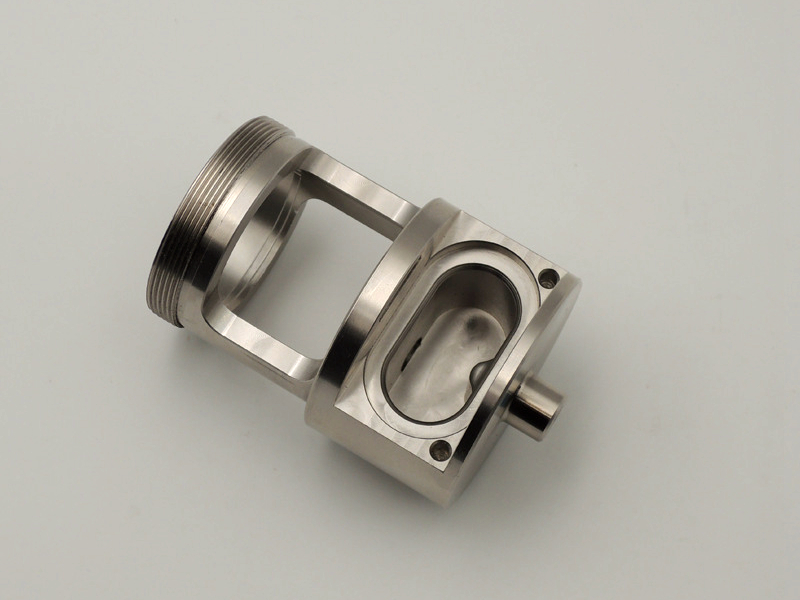
Geometric Considerations: A long bore changes section thickness and the heating or quenching path. Uneven walls, an off-centre hole, a blind end, and an interrupted exit can move asymmetrically. Provide section views, material condition, critical datums, and final geometry to the heat treater.
Heat Treatment Effects on Machined Features
Heat treatment can improve hardness, strength, wear resistance, or fatigue performance while moving a bore that was acceptable after drilling. Final approval therefore requires post-treatment geometry and surface checks, not only a furnace certificate.
Dimensional Distortion: Stress relief, phase transformation, quenching, and aging can change diameter, ovality, taper, straightness, or an outside-datum relationship. Slender parts, uneven walls, heavy stock removal, and near-surface bores raise risk. Base finishing allowance on validated movement rather than a generic percentage.
Surface Integrity Changes: Alloy, atmosphere, protection, and cycle can produce oxidation, decarburization, scale, contamination, or another reaction. These changes affect fatigue, corrosion, sealing, or flow. Specify atmosphere, masking, cleaning, and post-treatment finishing when the bore surface controls function.
Material-Specific Considerations in Processing Sequences
The correct machining and heat-treatment sequence changes by alloy family because hardening response, precipitation, stress relief, oxidation, and finishing requirements differ. The RFQ should state the exact grade, starting condition, final condition, hardness requirement, and whether bore dimensions apply before or after thermal processing.
High-Strength Steel Components
For 4140 Steel and 4340 Steel, sequence selection depends on starting hardness, final properties, allowable distortion, finishing stock, and bore function. Two routes should be compared during DFM:
Machining → Heat Treatment → Finishing: Drilling in a softer condition can reduce tool load and chip-control risk. Hardening and tempering set the required condition. Final honing, boring, or CNC Grinding Service can correct selected geometry when the drawing leaves stock and the chosen process can machine the hardened material.
Rough Machining → Heat Treatment → Finish Machining: This route leaves stock before treatment and finishes after movement occurs. It suits bores controlled by straightness, roundness, size, or finish. Allowance must cover expected movement without excessive hard-finishing load or thin-wall breakthrough.
Stainless Steel and Corrosion-Resistant Alloys
Stainless Steel SUS304 and Stainless Steel SUS316 require control of machining debris, heat tint, burrs, and embedded free iron. Stainless Steel Passivation Service may follow cleaning and descaling. ASTM A967/A967M covers chemical passivation treatments and related precautions; it does not repair geometry or trapped contamination. State the required method, verification test, and final cleanliness.
High-Performance Non-Ferrous Materials
For Titanium CNC Machining components, heat, galling, tool wear, and poor chip evacuation can damage a long bore before stress relief. For Aluminum CNC Machining parts, solution treatment and aging can move thin sections or long holes. Specify alloy, temper, thermal route, finishing allowance, and whether bore callouts apply before or after aging.
Engineering Solutions for Optimized Performance
Deep-hole parts perform more predictably after heat treatment when the manufacturing plan controls stress, sequence, finishing allowance, surface protection, cleaning, and inspection. These controls must be selected for the alloy and part geometry before production because polishing cannot recover every distorted, decarburized, or poorly located bore.
Process Sequencing Strategies
Stress Relief Intermediates: Long holes, thin walls, and heavy stock removal may justify stress relief before final drilling or finishing. Temperature, hold time, atmosphere, and cooling must match the alloy and final properties; do not insert a generic cycle without material-authority approval.
Distortion Compensation: Use allowance or geometric compensation only when measurements, simulation, or approved data support the movement direction and amount. Otherwise, compensation is a trial rather than a guarantee. The first article should confirm bore geometry and remaining wall.
Fixture Design: Support and quench orientation influence bowing, contact marks, and local cooling. Fixtures should avoid blocking heat flow or damaging a critical datum. Record any straightening performed after treatment.
Complementary Manufacturing Techniques
Post-Treatment Processing: After heat treatment, CNC Boring Service, honing, reaming, lapping, or grinding may restore selected size, roundness, straightness, and finish. Leave suitable stock, define the final datum, and perform cleaning and deburring after the last internal operation.
Surface Enhancement: A CNC Steel Nitriding Process or PVD Coating for Precision CNC Parts route should specify layer depth or thickness, masking, final bore size, clearance, and inspection state. A suitable treatment can improve wear or friction behavior, but it can also reduce clearance or alter edges.
Industry-Specific Applications and Considerations
The sequence needs strict control when a deep hole governs pressure, fatigue, flow, sliding motion, or safety-related assembly. Industry labels do not set the method; the drawing, material, service condition, and acceptance plan do.
Aerospace and Aviation Components
In Aerospace and Aviation applications, actuators, manifolds, bushings, and fittings may need stable deep holes after heat treatment. Specify alloy condition, heat-treatment standard, hardness, bore callouts, nondestructive-testing needs, and final datums. Contract evidence, not the industry name, proves compliance.
Automotive Performance Parts
For Automotive fuel, hydraulic, and transmission parts, heat treatment can improve wear while bore movement impairs flow or sealing. Identify pressure, fluid, cleanliness, burr limits, the dimensional decision rule, and whether inspection follows coating or hardening.
Oil and Gas Equipment
For Oil and Gas valve bodies, sleeves, and downhole tools, deep holes may face pressure, corrosion, abrasive flow, and thermal cycling. Confirm alloy condition, corrosion requirement, bore finish, pressure test, cleaning, traceability, and permitted post-treatment machining.
Deep-hole machining affects performance after heat treatment, but defined sequence, material condition, allowance, atmosphere, cleaning, and inspection control the risk. Verify final hardness, bore geometry, surface integrity, cleanliness, and function against the drawing. If post-treatment correction cannot reach the full bore, validate the thermal route on a representative first article before releasing the lot.