Can a Custom CNC Service Support Both Prototype Parts and Full Production Orders?
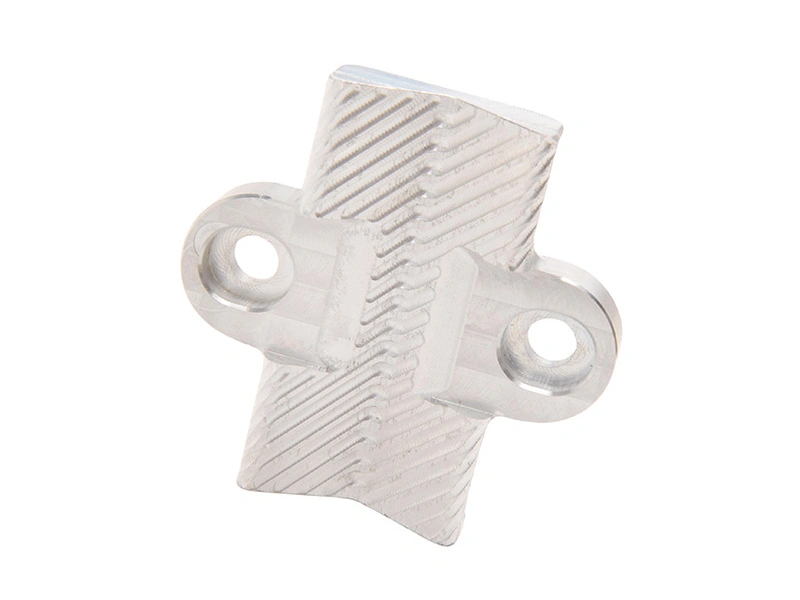
Can a Custom CNC Service Support Both Prototype Parts and Full Production Orders?
Yes, a custom CNC service can support both prototype parts and full production orders, but the priorities, process controls, and commercial logic usually change as the project moves from early validation into repeat manufacturing. In the prototype stage, the focus is speed, design flexibility, and engineering feedback. In low-volume manufacturing, the focus shifts toward repeatability, process refinement, and more stable cost control. In full production, the focus becomes efficiency, dimensional consistency across larger quantities, and reliable delivery performance. A supplier that can support all three stages through prototyping, low-volume manufacturing, and mass production can often create a smoother and lower-risk supply path for the buyer.
For buyers, the major advantage of using one supplier across the full lifecycle is continuity. The same engineering team can understand the drawing history, process challenges, tolerance priorities, and revision logic from the first sample through the repeat order stage. That usually improves communication efficiency, helps maintain dimensional continuity between batches, and reduces the risk of re-explaining the project every time the order volume changes.
1. Prototype, Low-Volume, and Full Production Do Not Have the Same Priorities
Although the same part may move through all three stages, the manufacturing goals are different at each one. Prototype parts are usually about validating fit, function, assembly logic, material choice, and early risk areas. Low-volume orders are often used for pilot builds, customer testing, launch support, or bridge production before demand becomes stable. Full production focuses on repeatability, batch efficiency, and cost discipline over time.
This means a capable custom CNC supplier does more than simply repeat the same process at different quantities. The supplier should adjust tooling strategy, setup planning, inspection flow, and scheduling logic based on the current stage of the part program.
Project Stage | Main Priority | Typical Buyer Focus |
|---|---|---|
Fast learning and design validation | Speed, flexibility, engineering feedback | |
Stable small-batch supply | Repeatability, controlled cost, bridge delivery | |
Efficiency and consistency at scale | Unit cost, delivery reliability, process stability |
2. What Do Buyers Usually Need Most in the Prototype Stage?
At the prototype stage, buyers usually need fast turnaround, real material parts, and enough flexibility to make drawing updates after testing. The goal is often not to achieve the absolute lowest cost per part. The goal is to learn quickly. That may include checking hole positions, thread fit, wall thickness, sealing logic, assembly clearance, or whether the selected material behaves as expected in real use.
A custom CNC service is well suited to this stage because it can make parts directly from design data without requiring dedicated tooling. That makes it easier to respond when dimensions change after first article review or when engineering wants to compare two design variants before freezing the release.
3. What Changes When the Project Moves into Low-Volume Manufacturing?
Once the design becomes more stable, the project often moves into low-volume manufacturing. At this stage, buyers usually care more about repeatability and delivery rhythm than they did during first-sample prototyping. The supplier may begin refining setup methods, improving inspection checkpoints, and organizing batch planning to keep dimensions more stable across multiple runs.
This stage is important because it often reveals whether the part can be produced consistently rather than only once. A supplier that already handled the prototype stage can usually make this transition more efficiently because the geometry, material behavior, tolerance risks, and critical features are already understood.
4. What Does Full Production Require from a Custom CNC Service?
In full production, the focus becomes process discipline. Buyers expect stable dimensional control, predictable batch-to-batch consistency, organized delivery planning, and lower unit cost through better production efficiency. The supplier may use more refined workholding, more stable inspection frequency, better lot planning, and stronger process standardization than in the early prototype phase.
Even though the part is still custom and made to drawing, production now depends less on design flexibility and more on manufacturing control. This is where the earlier prototype and low-volume learning becomes valuable. If the supplier already knows how the part behaves in machining, the transition into regular production can be more stable and less risky.
5. Why Is It Beneficial to Have One Supplier Support the Entire Process?
Using one supplier across prototype, low-volume, and full production stages can create significant practical advantages for the buyer. The supplier already knows the drawing history, revision logic, feature priorities, inspection strategy, and common risk areas. That reduces requalification effort and lowers the chance that critical design knowledge is lost during a handoff to a new manufacturer.
It also improves speed. A new supplier must usually relearn the part from the beginning, including how the material behaves, which dimensions drive function, and where deformation or burr risk appears. An existing supplier already holds that experience. That accumulated process knowledge can save time and reduce error when the program expands.
Benefit of One Supplier | Why It Helps Buyers |
|---|---|
Process knowledge continuity | The supplier already understands the part’s technical history |
Faster problem solving | Known risks and prior adjustments shorten engineering response time |
Lower transfer risk | Reduces the chance of misinterpretation by a new vendor |
More stable communication | Same teams stay aligned on revisions, tolerance priorities, and delivery expectations |
6. How Does One Supplier Improve Dimensional Continuity?
Dimensional continuity means that parts made at different stages still behave consistently in assembly and function. This matters because a prototype that fits perfectly is not enough if the later low-volume or production batch shifts in hole position, thread condition, surface quality, or bore size. When one supplier manages the program across stages, the machining knowledge used to achieve the original result is more likely to carry forward.
This is especially important for parts with critical mating surfaces, sealing features, concentric diameters, or close-tolerance mounting patterns. The supplier can preserve datum logic, fixture strategy, and inspection priorities from the prototype phase into the more repeatable production phase instead of resetting the process from zero.
7. How Does One Supplier Improve Communication Efficiency?
Communication efficiency improves when the buyer does not need to repeatedly explain the same part history to different vendors. One supplier can track revision changes, understand why earlier design changes were made, and respond faster when new questions arise. This becomes especially valuable when programs move quickly and drawing updates happen between sample approval, pilot builds, and final release.
For buyers, this means fewer clarification cycles, fewer quotation misunderstandings, and less risk that an older drawing or outdated assumption will reappear later in the project. Efficient communication is often one of the hidden benefits of lifecycle continuity in a custom CNC relationship.
8. Can the Same Supplier Really Balance Flexibility and Production Consistency?
Yes, but only if the supplier has the engineering depth to manage each stage differently. Prototype work needs responsiveness and iteration support. Low-volume work needs repeatability and controlled cost. Full production needs stronger scheduling, process control, and consistency discipline. A capable custom CNC supplier should be able to shift emphasis as the order matures instead of applying one fixed workflow to every volume level.
That means the buyer should evaluate not only whether the supplier can machine the part, but whether the supplier can support the full program path with the right balance of flexibility early and control later.
9. Practical Buyer Guide
If your current need is... | Best Supplier Capability to Check | Main Reason |
|---|---|---|
Fast design validation | You need quick feedback and drawing flexibility | |
Bridge production after sample approval | You need repeatable supply before full production demand stabilizes | |
Stable recurring order demand | You need consistent dimensions, scheduling, and unit-cost discipline | |
Long-term supplier partnership | Full lifecycle support | One supplier can improve continuity, communication, and process learning |
10. Summary
In summary, a custom CNC service can support both prototype parts and full production orders, but each stage has a different priority. Prototype work emphasizes speed and design flexibility. Low-volume manufacturing emphasizes repeatability and controlled supply. Full production emphasizes efficiency, consistency, and reliable delivery.
For buyers, using one supplier across the full process can create important advantages in dimensional continuity, engineering knowledge retention, and communication efficiency. When the same supplier understands the part from the first sample through the recurring production order, the transition between stages is usually faster, more stable, and lower risk than restarting the project with a new source at each phase.