Which Design Features Need Special Prototype Review?
Which Design Features Need Special Prototype Review?
Design features need special prototype review when tool access, workholding, chip evacuation, inspection, assembly, or material behavior can change the intended function. Deep pockets, narrow channels, cross holes, thin walls, internal corners, recessed seats, and complex datum relationships deserve an explicit question before machining. The buyer should link each feature to a failure mode, a measurement or test, and an owner for the decision.
Screen Feature Risk
Mark locating surfaces, moving clearances, threaded connections, load paths, sealing boundaries, and cosmetic zones. For each, state datum, tolerance intent, support state, tool or gauge access, and acceptance. A feature that is easy to model may require an extra setup or a special tool. A cosmetic surface may need protection from clamp marks while a hidden locating face may need strict control.
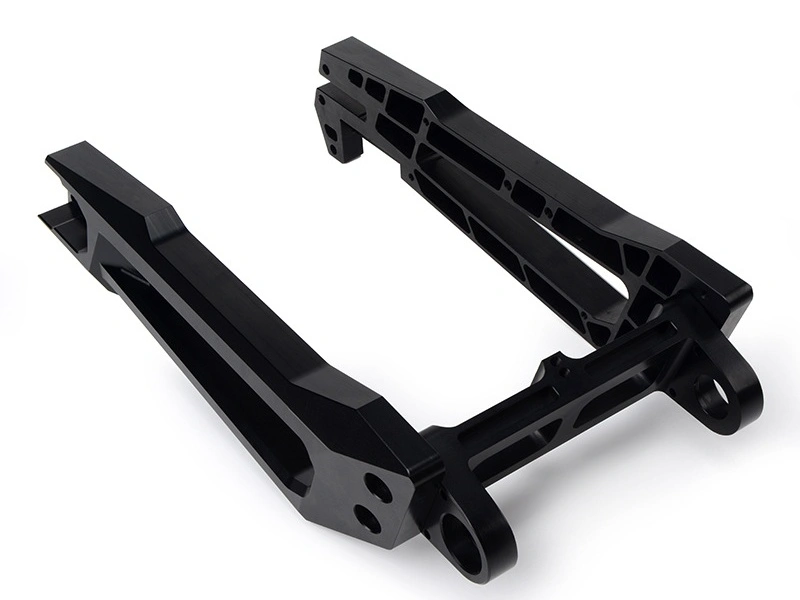
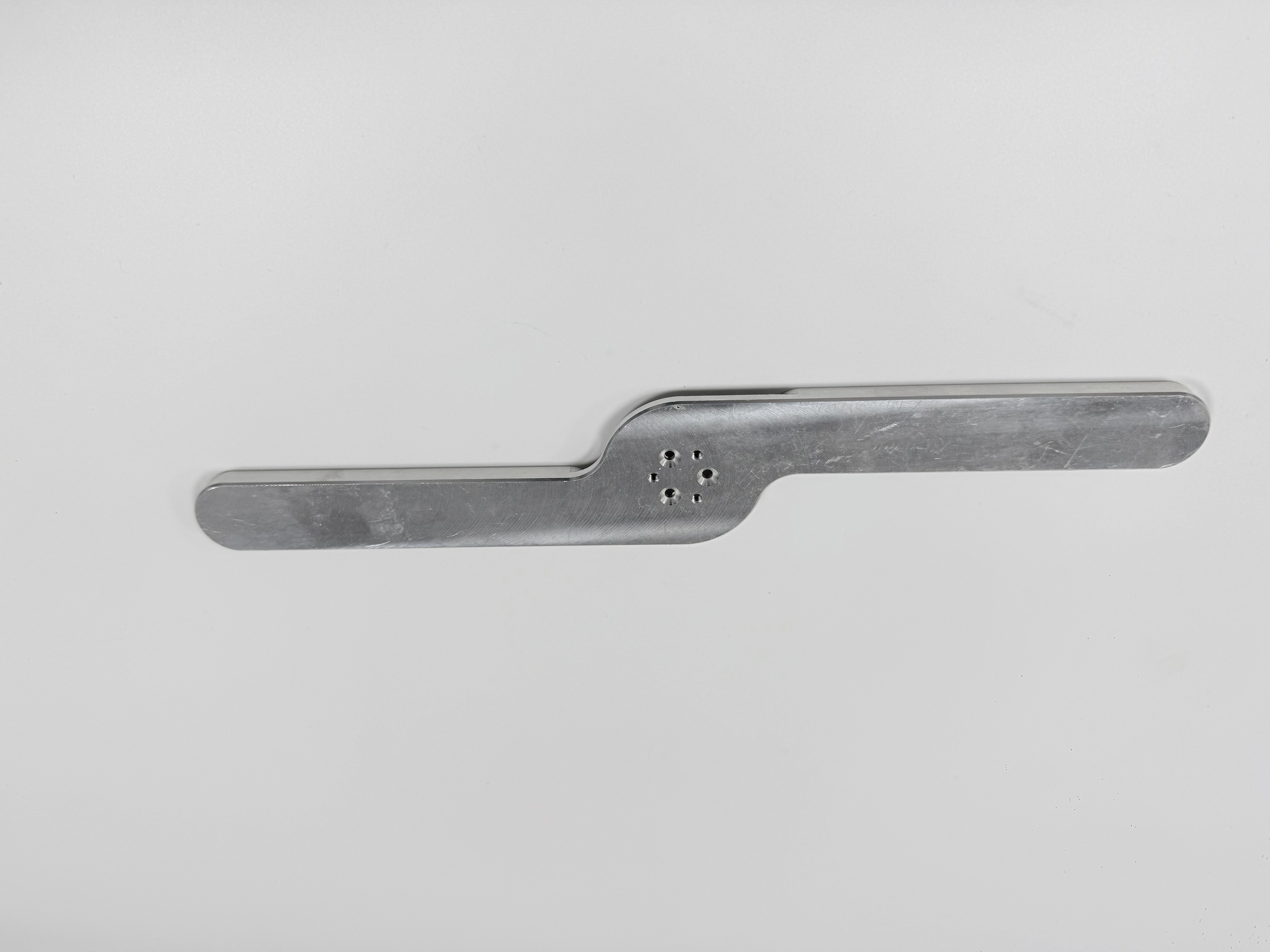
The link-arm image pair shows recessed channels, a central circular region, and rounded ends. It cannot establish function, load, alloy, tolerance, or application. Use those visible features to ask where a tool or mating component must reach, not to infer a capability or customer case.
Review Access and Fixture
Document approach direction, holder clearance, tool diameter, probe or gauge access, support, clamp direction, and datum transfer. If a thin feature can relax after unclamping, define restrained and free-state checks. If a central pattern locates another part, specify alignment and position evidence. A prototype fixture may prove access without being suitable for repeat production.
Record chips, burrs, deflection, reorientation, and operator access as learning. Classify each observation as design change, setup control, tooling requirement, or open question. If the fixture is reused, identify what remains valid and what needs requalification.
Review Tolerance and Finish Intent
Classify dimensions as CTQs, references, cosmetic controls, or open variables. Define material, edge break, roughness, cleaning, coating, and heat-treatment state where they influence the prototype test. A fit check demonstrates engagement; it does not prove every location or form. A dimensional report describes the characteristic in its alignment; it does not silently prove function.
Use a Feature Review Table
| Feature risk | Review question | Evidence |
|---|---|---|
| Deep or narrow | Can tool, chips, and gauge reach? | Access review and measured result |
| Thin or flexible | What support state represents function? | Restrained/free comparison |
| Locating interface | Which datum and position matter? | Defined alignment and CTQ report |
| Cosmetic surface | What marks and finish are acceptable? | Visual and specified finish evidence |
The table is a review aid, not a production guarantee. A CNC milling route or boring route may be evaluated when the characteristic requires it, but the route name is not evidence by itself.
Put Feature Review in the RFQ
Provide drawing and model revision, CTQ list, datum, feature access constraints, material and condition, finish, fixture, inspection, test, quantity, and records. Ask suppliers to identify special tools, setups, support, probes, gauges, and limitations. Require notification before feature, process, material, fixture, tool, program, or inspection changes.
Request an anonymized route or design-for-machining response tied to comparable geometry. Ask which features are validated in the prototype and which remain open for production. This makes design feedback actionable rather than a generic manufacturability comment.
Review Feature Failure Modes
For every high-risk feature, name a plausible failure mode and the evidence that can detect it. A narrow channel can retain chips or develop a burr; a thin wall can relax after unclamping; a recessed seat can become inaccessible to a gauge; a cross hole can lose its positional relationship after reorientation. Classify the response as a design change, setup control, tooling requirement, or test limitation.
Do not treat a feature as low risk because it is visually small. A small hole may control alignment, while a large face may be cosmetic. Link consequence to the functional map and identify who approves a proposed change. If the consequence is unknown, keep the item open and plan a test rather than inventing an acceptance rule.
Review Operation Sequence
Ask whether roughing, semi-finishing, finishing, deburring, cleaning, and inspection occur in an order that preserves the learning. A finishing cut before a fit trial may hide stock effects; cleaning after inspection may change a thread or interface; a second setup may alter datum transfer. Record which sequence the prototype represents and what changes are expected in production.
When grinding, coating, or heat treatment is proposed, define its effect and post-process check. A process name is not evidence; connect it to a characteristic and measurable state.
Ask Focused RFQ Questions
Request tool approach, holder clearance, fixture contact, chip strategy, probe or gauge access, datum transfer, material state, finish, and inspection method for each critical feature. Ask suppliers to identify what they can validate in the prototype and what requires customer input. Require notification before geometry, process, material, fixture, tool, program, or inspection changes.
Compare answers by evidence. A response that names an access limit is more useful than a universal manufacturability claim. Keep the design review with the quote so later revisions can be compared to original assumptions.
Buyer Action
Mark high-risk features, failure modes, operation sequence, and evidence before release. Approve only changes that preserve intended function or have a documented test plan.
Buyer Action
Review high-risk features before release, define evidence, and assign owners. Close or carry each open item into the next revision; do not let a fast prototype schedule erase an access or inspection risk.