
English
Why are bore tolerance, roundness, and surface finish important for bronze bushings?
Table of Contents
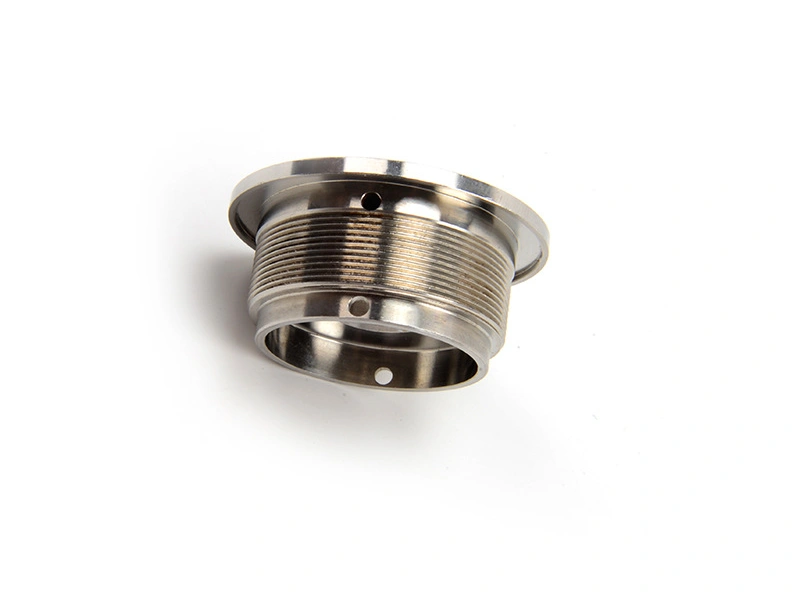
<h2 id="why-are-bore-tolerance,-roundness,-and-surface-finish-important-for-bronze-bushings?">Why are bore tolerance, roundness, and surface finish important for bronze bushings?</h2><p><strong>Bore tolerance, roundness, and surface finish are critical for bronze bushings</strong> because they determine the installed clearance, contact pattern, lubricant film, friction, heat, noise, wear, and seizure risk. These controls work together rather than as three independent drawing notes. A correct free-state bore can change after press fitting, and an acceptable roughness value cannot compensate for poor roundness or a blocked oil path. For <a target="_blank" href="https://www.newaymachining.com/services/bronze-cnc-machining">bronze bushing machining</a>, buyers should define the shaft, housing, fit, temperature, load, speed, lubrication, datum, and inspection state before setting acceptance limits.</p><div data-type="row" class="row"><div class="col-12 col-md-6" data-type="col"><p><a href="https://www.newaymachining.com/services/bronze-cnc-machining"><img src="https://www.newaymachining.com/storage/attachments/2026/05/10/bronze-bushing-tolerances-bronze-bushing-machining-bronze-bearing-surface-finish.webp" width="800" height="600" loading="lazy"></a></p></div><div class="col-12 col-md-6" data-type="col"><p><a href="https://www.newaymachining.com/services/bronze-cnc-machining"><img src="https://www.newaymachining.com/storage/attachments/2026/05/10/why-are-bore-tolerance-roundness-and-surface-finish-important-for-bronze-bushings.webp" width="800" height="600" loading="lazy"></a></p></div></div><div class="i-typography-table-responsive"><table><tbody><tr><th colspan="1" rowspan="1"><p>Control Item</p></th><th colspan="1" rowspan="1"><p>Possible Impact</p></th></tr><tr><td colspan="1" rowspan="1"><p>Bore tolerance</p></td><td colspan="1" rowspan="1"><p>Sets free-state and installed clearance; verify against shaft size, housing fit, temperature, and measurement state.</p></td></tr><tr><td colspan="1" rowspan="1"><p>Roundness</p></td><td colspan="1" rowspan="1"><p>Controls local tight spots, load distribution, lubricant-film continuity, noise, and uneven wear.</p></td></tr><tr><td colspan="1" rowspan="1"><p>Concentricity</p></td><td colspan="1" rowspan="1"><p>Aligns the running bore with the housing datum and limits edge loading or shaft misalignment.</p></td></tr><tr><td colspan="1" rowspan="1"><p>Surface roughness</p></td><td colspan="1" rowspan="1"><p>Shapes lubricant retention, run-in behavior, friction, debris generation, and inspection method.</p></td></tr><tr><td colspan="1" rowspan="1"><p>Lubrication grooves</p></td><td colspan="1" rowspan="1"><p>Distribute lubricant only when groove position, depth, edges, flow direction, and cleanliness are controlled.</p></td></tr><tr><td colspan="1" rowspan="1"><p>Oil holes</p></td><td colspan="1" rowspan="1"><p>Provide lubricant entry but can introduce burrs, blocked passages, stress concentration, or debris.</p></td></tr><tr><td colspan="1" rowspan="1"><p>Burr control</p></td><td colspan="1" rowspan="1"><p>Protects the shaft, bore, oil path, assembly fit, and delivered cleanliness.</p></td></tr></tbody></table></div><h3 id="1.-bore-tolerance-controls-the-real-working-fit">1. Bore tolerance controls the real working fit</h3><p>The drawing bore limit must produce the required running clearance after all assembly effects are considered. A bronze sleeve can contract when pressed into a housing, expand with temperature, or change shape when a thin wall is released from the fixture. The buyer should identify the shaft size and tolerance, housing bore and interference, operating temperature, lubricant, load, speed, and whether acceptance applies before or after installation. If the bore is too small, contact and heat can increase until the interface scuffs or seizes. If it is too large, the shaft can impact, misalign, vibrate, or develop an unstable oil film. First-article evidence should state the support, temperature, gauge, datum, and free-state or installed condition used for measurement.</p><h3 id="2.-roundness-affects-how-evenly-the-bushing-runs-and-wears">2. Roundness affects how evenly the bushing runs and wears</h3><p>Nominal diameter alone does not reveal lobing, ovality, or local tight areas. A bore can meet a two-point size check while still loading the shaft at only a few locations. That contact pattern reduces the area available to carry load and interrupts lubricant distribution. Buyers should set roundness from the functional clearance and wear risk, then specify a measurement method capable of detecting the expected form error. The inspection plan should distinguish roundness from size and runout. It should also state whether the part is measured before or after press fitting. A useful release check compares the free-state bore, installed bore, and shaft rotation or contact evidence under the defined assembly condition.</p><h3 id="3.-surface-finish-influences-lubrication-and-friction">3. Surface finish influences lubrication and friction</h3><p>The running surface needs a finish suited to the lubricant, speed, load, counterface, and break-in plan. A rough bore may damage the shaft, generate debris, or rupture a thin lubricant film. An overly smooth or incorrectly directed surface may retain too little lubricant for the intended duty. The RFQ should state the roughness parameter, limit, cutoff, measurement direction, sampling locations, and delivered condition. If honing, polishing, coating, or running-in changes the surface, identify which stage is inspected. Surface finish should be reviewed with waviness, lay, embedded debris, and burrs because a single roughness value cannot describe every failure mode. Qualification should use the application-specific friction, temperature, noise, or wear criterion when dimensional evidence alone is insufficient.</p><h3 id="4.-concentricity-and-related-geometry-matter-for-assembly-life">4. Concentricity and related geometry matter for assembly life</h3><p>The bore must align with the outside diameter, flange, shoulder, or housing datum that locates the bushing. Misalignment can force the shaft toward one edge, reduce local clearance, and create a wear band even when the bore size is acceptable. The drawing should identify the functional datum system and avoid using a loose reference surface that does not locate the installed part. Wall-thickness variation, face squareness, cylindrical form, and runout may be more useful than one generic geometry callout. Measurement should reproduce the functional setup without deforming the sleeve. Buyers can use broader <a target="_blank" href="https://www.newaymachining.com/blogs/understanding-machining-tolerances-what-buyers-must-know-before-ordering-cnc-parts">CNC machining tolerances</a> guidance to separate size, form, orientation, and location controls.</p><h3 id="5.-lubrication-features-and-burr-control-also-affect-performance">5. Lubrication features and burr control also affect performance</h3><p>Grooves and oil holes must deliver lubricant without creating damaging edges or trapped debris. Define their position, width, depth, entry direction, intersection, edge break, and prohibited zones relative to the loaded contact area. State how passages are cleaned and how flow or openness is verified. A burr at a cross-hole can scratch the shaft, shed particles, restrict oil, or create a false bore reading. Aggressive deburring can also round a functional edge or alter groove geometry. The inspection plan should therefore combine visual or magnified edge checks, passage verification, cleanliness acceptance, and dimensional evidence. This risk-based evidence follows the same logic as <a target="_blank" href="https://www.newaymachining.com/blogs/quality-control-in-cnc-machining-how-tolerances-surface-finish-and-geometry-are-verified">quality control in CNC machining</a>.</p><h3 id="6.-how-these-features-are-usually-controlled">6. How these features are usually controlled</h3><p>Control begins with a released drawing that links bore size, roundness, datum alignment, roughness, grooves, oil holes, burrs, and cleanliness to the real assembly. The process may use stable stock, controlled workholding, staged roughing and finishing, and unclamped verification. Suitable finishing can be planned through <a target="_blank" href="https://www.newaymachining.com/services/cnc-turning">CNC turning</a>, while geometry and evidence planning can use <a target="_blank" href="https://www.newaymachining.com/services/precision-machining">precision machining</a> methods. The buyer should request material traceability, first-article results, gauge method, sampling, nonconformance reaction, and any installed or functional check. The <a target="_blank" href="https://www.newaymachining.com/study-cases/bronze-cnc-machining-for-power-generation-components-and-corrosion-resistant-parts">Bronze CNC machining case</a> is a contextual reference, not proof that an unqualified tolerance or finish will work in another assembly.</p>
<h2 id="why-are-bore-tolerance,-roundness,-and-surface-finish-important-for-bronze-bushings?">Why are bore tolerance, roundness, and surface finish important for bronze bushings?</h2><p><strong>Bore tolerance, roundness, and surface finish are critical for bronze bushings</strong> because they determine the installed clearance, contact pattern, lubricant film, friction, heat, noise, wear, and seizure risk. These controls work together rather than as three independent drawing notes. A correct free-state bore can change after press fitting, and an acceptable roughness value cannot compensate for poor roundness or a blocked oil path. For <a target="_blank" href="https://www.newaymachining.com/services/bronze-cnc-machining">bronze bushing machining</a>, buyers should define the shaft, housing, fit, temperature, load, speed, lubrication, datum, and inspection state before setting acceptance limits.</p><div data-type="row" class="row"><div class="col-12 col-md-6" data-type="col"><p><a href="https://www.newaymachining.com/services/bronze-cnc-machining"><img src="https://www.newaymachining.com/storage/attachments/2026/05/10/bronze-bushing-tolerances-bronze-bushing-machining-bronze-bearing-surface-finish.webp" width="800" height="600" loading="lazy"></a></p></div><div class="col-12 col-md-6" data-type="col"><p><a href="https://www.newaymachining.com/services/bronze-cnc-machining"><img src="https://www.newaymachining.com/storage/attachments/2026/05/10/why-are-bore-tolerance-roundness-and-surface-finish-important-for-bronze-bushings.webp" width="800" height="600" loading="lazy"></a></p></div></div><div class="i-typography-table-responsive"><table><tbody><tr><th colspan="1" rowspan="1"><p>Control Item</p></th><th colspan="1" rowspan="1"><p>Possible Impact</p></th></tr><tr><td colspan="1" rowspan="1"><p>Bore tolerance</p></td><td colspan="1" rowspan="1"><p>Sets free-state and installed clearance; verify against shaft size, housing fit, temperature, and measurement state.</p></td></tr><tr><td colspan="1" rowspan="1"><p>Roundness</p></td><td colspan="1" rowspan="1"><p>Controls local tight spots, load distribution, lubricant-film continuity, noise, and uneven wear.</p></td></tr><tr><td colspan="1" rowspan="1"><p>Concentricity</p></td><td colspan="1" rowspan="1"><p>Aligns the running bore with the housing datum and limits edge loading or shaft misalignment.</p></td></tr><tr><td colspan="1" rowspan="1"><p>Surface roughness</p></td><td colspan="1" rowspan="1"><p>Shapes lubricant retention, run-in behavior, friction, debris generation, and inspection method.</p></td></tr><tr><td colspan="1" rowspan="1"><p>Lubrication grooves</p></td><td colspan="1" rowspan="1"><p>Distribute lubricant only when groove position, depth, edges, flow direction, and cleanliness are controlled.</p></td></tr><tr><td colspan="1" rowspan="1"><p>Oil holes</p></td><td colspan="1" rowspan="1"><p>Provide lubricant entry but can introduce burrs, blocked passages, stress concentration, or debris.</p></td></tr><tr><td colspan="1" rowspan="1"><p>Burr control</p></td><td colspan="1" rowspan="1"><p>Protects the shaft, bore, oil path, assembly fit, and delivered cleanliness.</p></td></tr></tbody></table></div><h3 id="1.-bore-tolerance-controls-the-real-working-fit">1. Bore tolerance controls the real working fit</h3><p>The drawing bore limit must produce the required running clearance after all assembly effects are considered. A bronze sleeve can contract when pressed into a housing, expand with temperature, or change shape when a thin wall is released from the fixture. The buyer should identify the shaft size and tolerance, housing bore and interference, operating temperature, lubricant, load, speed, and whether acceptance applies before or after installation. If the bore is too small, contact and heat can increase until the interface scuffs or seizes. If it is too large, the shaft can impact, misalign, vibrate, or develop an unstable oil film. First-article evidence should state the support, temperature, gauge, datum, and free-state or installed condition used for measurement.</p><h3 id="2.-roundness-affects-how-evenly-the-bushing-runs-and-wears">2. Roundness affects how evenly the bushing runs and wears</h3><p>Nominal diameter alone does not reveal lobing, ovality, or local tight areas. A bore can meet a two-point size check while still loading the shaft at only a few locations. That contact pattern reduces the area available to carry load and interrupts lubricant distribution. Buyers should set roundness from the functional clearance and wear risk, then specify a measurement method capable of detecting the expected form error. The inspection plan should distinguish roundness from size and runout. It should also state whether the part is measured before or after press fitting. A useful release check compares the free-state bore, installed bore, and shaft rotation or contact evidence under the defined assembly condition.</p><h3 id="3.-surface-finish-influences-lubrication-and-friction">3. Surface finish influences lubrication and friction</h3><p>The running surface needs a finish suited to the lubricant, speed, load, counterface, and break-in plan. A rough bore may damage the shaft, generate debris, or rupture a thin lubricant film. An overly smooth or incorrectly directed surface may retain too little lubricant for the intended duty. The RFQ should state the roughness parameter, limit, cutoff, measurement direction, sampling locations, and delivered condition. If honing, polishing, coating, or running-in changes the surface, identify which stage is inspected. Surface finish should be reviewed with waviness, lay, embedded debris, and burrs because a single roughness value cannot describe every failure mode. Qualification should use the application-specific friction, temperature, noise, or wear criterion when dimensional evidence alone is insufficient.</p><h3 id="4.-concentricity-and-related-geometry-matter-for-assembly-life">4. Concentricity and related geometry matter for assembly life</h3><p>The bore must align with the outside diameter, flange, shoulder, or housing datum that locates the bushing. Misalignment can force the shaft toward one edge, reduce local clearance, and create a wear band even when the bore size is acceptable. The drawing should identify the functional datum system and avoid using a loose reference surface that does not locate the installed part. Wall-thickness variation, face squareness, cylindrical form, and runout may be more useful than one generic geometry callout. Measurement should reproduce the functional setup without deforming the sleeve. Buyers can use broader <a target="_blank" href="https://www.newaymachining.com/blogs/understanding-machining-tolerances-what-buyers-must-know-before-ordering-cnc-parts">CNC machining tolerances</a> guidance to separate size, form, orientation, and location controls.</p><h3 id="5.-lubrication-features-and-burr-control-also-affect-performance">5. Lubrication features and burr control also affect performance</h3><p>Grooves and oil holes must deliver lubricant without creating damaging edges or trapped debris. Define their position, width, depth, entry direction, intersection, edge break, and prohibited zones relative to the loaded contact area. State how passages are cleaned and how flow or openness is verified. A burr at a cross-hole can scratch the shaft, shed particles, restrict oil, or create a false bore reading. Aggressive deburring can also round a functional edge or alter groove geometry. The inspection plan should therefore combine visual or magnified edge checks, passage verification, cleanliness acceptance, and dimensional evidence. This risk-based evidence follows the same logic as <a target="_blank" href="https://www.newaymachining.com/blogs/quality-control-in-cnc-machining-how-tolerances-surface-finish-and-geometry-are-verified">quality control in CNC machining</a>.</p><h3 id="6.-how-these-features-are-usually-controlled">6. How these features are usually controlled</h3><p>Control begins with a released drawing that links bore size, roundness, datum alignment, roughness, grooves, oil holes, burrs, and cleanliness to the real assembly. The process may use stable stock, controlled workholding, staged roughing and finishing, and unclamped verification. Suitable finishing can be planned through <a target="_blank" href="https://www.newaymachining.com/services/cnc-turning">CNC turning</a>, while geometry and evidence planning can use <a target="_blank" href="https://www.newaymachining.com/services/precision-machining">precision machining</a> methods. The buyer should request material traceability, first-article results, gauge method, sampling, nonconformance reaction, and any installed or functional check. The <a target="_blank" href="https://www.newaymachining.com/study-cases/bronze-cnc-machining-for-power-generation-components-and-corrosion-resistant-parts">Bronze CNC machining case</a> is a contextual reference, not proof that an unqualified tolerance or finish will work in another assembly.</p>
Related Blogs
Subscribe for expert design and manufacturing tips delivered to your inbox.
Share this Post:
Neway Precision Works Ltd.
No.3 Lefushan Industry West Road
Fenggang, Dongguan, China
ZIP 523000
Solutions
Copyright © 2026 Machining Precision Works Ltd.All Rights Reserved.