
English
How can brass CNC machining cost be reduced without affecting threads, sealing, or appearance?
Table of Contents
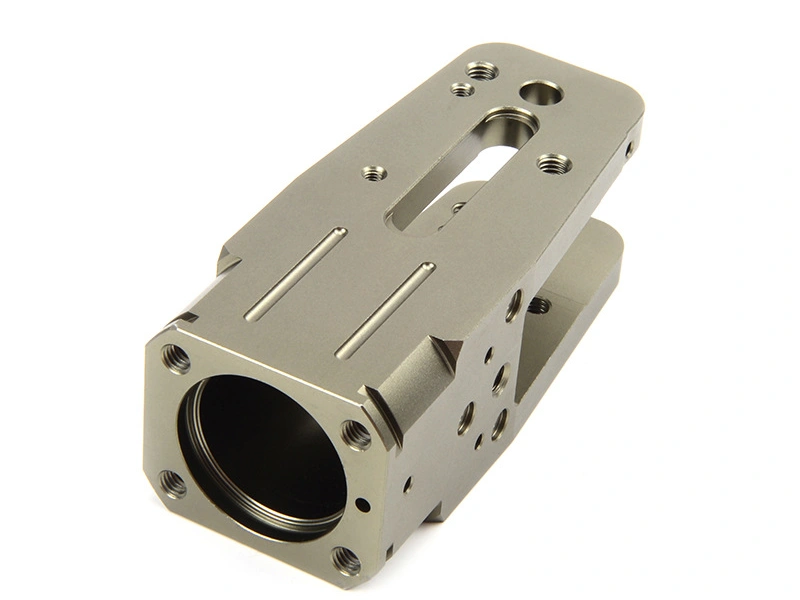
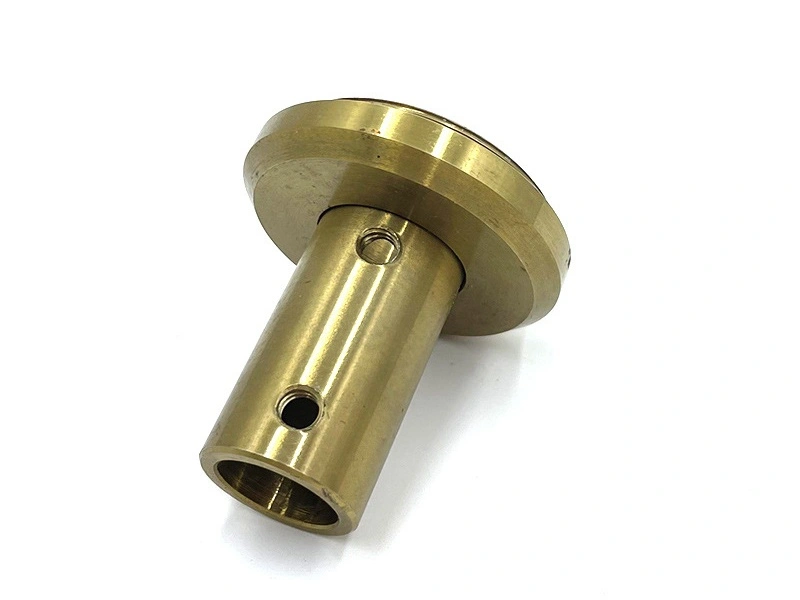
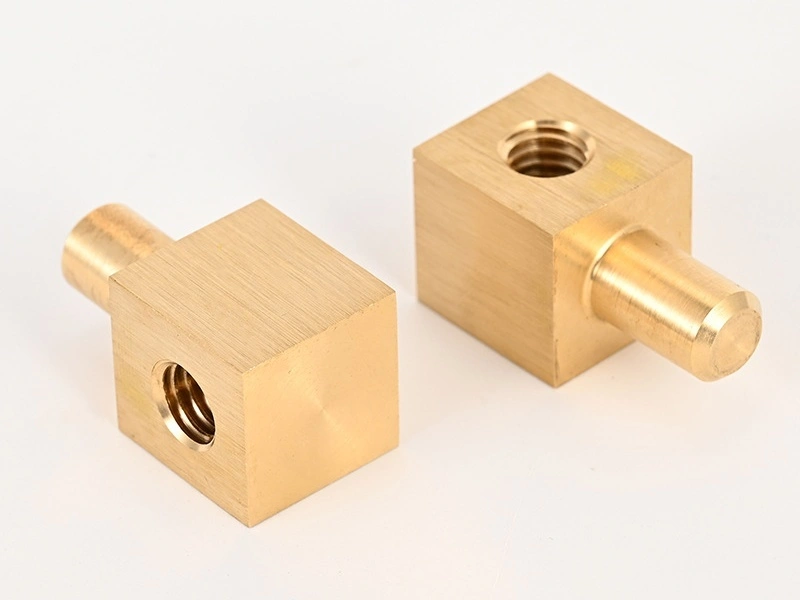
<h2 id="how-can-brass-cnc-machining-cost-be-reduced-without-affecting-threads,-sealing,-or-appearance?">How can brass CNC machining cost be reduced without affecting threads, sealing, or appearance?</h2><p><strong>Brass computer numerical control (CNC) machining cost</strong> can be reduced by protecting the delivered functions first, then removing cost from stock size, setup count, unnecessary tolerances, difficult tool access, excessive finish coverage, and poorly matched lot quantities. Thread form and engagement, the actual sealing interface, material compliance, plated dimensions, burr limits, and defined cosmetic zones should remain fixed unless engineering approves a change. Buyers should compare prototype, <a target="_blank" href="https://www.newaymachining.com/services/low-volume-manufacturing">low-volume manufacturing</a>, and <a target="_blank" href="https://www.newaymachining.com/services/mass-production">mass production</a> prices with the same acceptance scope. A lower unit price is not a valid saving if inspection, finishing, packaging, or rework has simply moved outside the quote. Effective <a target="_blank" href="https://www.newaymachining.com/services/brass-cnc-machining">brass CNC machining cost</a> planning therefore evaluates total delivered cost and records every approved deviation.</p><div data-type="row" class="row"><div class="col-12 col-md-6" data-type="col"><p><a href="https://www.newaymachining.com/services/brass-cnc-machining"><img src="https://www.newaymachining.com/storage/attachments/2026/05/10/reduce-brass-cnc-machining-cost-brass-cnc-machining-cost.webp" width="800" height="600" loading="lazy"></a></p></div><div class="col-12 col-md-6" data-type="col"><p><a href="https://www.newaymachining.com/services/brass-cnc-machining"><img src="https://www.newaymachining.com/storage/attachments/2026/05/10/how-can-brass-cnc-machining-cost-be-reduced-without-affecting-threads-sealing-or-appearance.webp" width="800" height="600" loading="lazy"></a></p></div></div><div class="i-typography-table-responsive"><table><tbody><tr><th colspan="1" rowspan="1"><p>Cost lever to review</p></th><th colspan="1" rowspan="1"><p>Protected boundary and confirmation</p></th></tr><tr><td colspan="1" rowspan="1"><p>Alloy, form, or stock alternative</p></td><td colspan="1" rowspan="1"><p>Confirm specification, service, certification, finish response, and written approval</p></td></tr><tr><td colspan="1" rowspan="1"><p>Functional surface map</p></td><td colspan="1" rowspan="1"><p>Retain thread, seal, fit, flow, datum, and visible-area requirements</p></td></tr><tr><td colspan="1" rowspan="1"><p>General tolerance relaxation</p></td><td colspan="1" rowspan="1"><p>Verify that assembly, sealing, alignment, and appearance remain unchanged</p></td></tr><tr><td colspan="1" rowspan="1"><p>Geometry and setup simplification</p></td><td colspan="1" rowspan="1"><p>Review tool access, wall support, burr direction, datum transfer, and stock removal</p></td></tr><tr><td colspan="1" rowspan="1"><p>Thread inspection alignment</p></td><td colspan="1" rowspan="1"><p>Use the contractual gauge state and retain required sealing validation</p></td></tr><tr><td colspan="1" rowspan="1"><p>Finish and cosmetic zoning</p></td><td colspan="1" rowspan="1"><p>Define coating, masking, final dimensions, visual class, and protected handling</p></td></tr><tr><td colspan="1" rowspan="1"><p>Lot size and release strategy</p></td><td colspan="1" rowspan="1"><p>Compare setup, tooling, material, inspection, inventory, and change risk together</p></td></tr><tr><td colspan="1" rowspan="1"><p>Design-for-manufacturability change before order</p></td><td colspan="1" rowspan="1"><p>Update the controlled drawing and close approval before production release</p></td></tr></tbody></table></div><h3 id="1.-start-with-the-right-brass-grade-for-the-real-function">1. Start with the right brass grade for the real function</h3><p>Material cost should be reviewed against the governing specification, product form, condition, certification, service environment, manufacturing route, and final finish. A readily machinable C360 bar may support efficient cutting for an eligible design, but it is not an automatic substitute for C377, C260, a corrosion-focused alloy, or another contractually specified material. The original choice may protect forging history, composition restrictions, pressure-service acceptance, forming behavior, appearance, or coating performance. Ask suppliers to price the specified route and any clearly identified alternative separately. Engineering and purchasing should approve a substitution only after the drawing, certificate requirement, functional risk, and qualification need are reconciled.</p><h3 id="2.-keep-tight-control-only-on-threads,-sealing-areas,-and-visible-surfaces">2. Keep tight control only on threads, sealing areas, and visible surfaces</h3><p>Create a feature map that separates threads, sealing faces, mating diameters, flow passages, datum features, plated fits, and buyer-visible surfaces from nonfunctional clearance geometry. Each protected zone should have an acceptance reason and measurement method. General exterior diameters, hidden faces, or clearance lengths may permit wider tolerances or a standard finish, but only after the assembly stack and datum relationship are reviewed. Do not relax every dimension sharing a title-block tolerance without checking how features interact. Targeted use of <a target="_blank" href="https://www.newaymachining.com/blogs/understanding-machining-tolerances-what-buyers-must-know-before-ordering-cnc-parts">CNC machining tolerances</a> reduces unnecessary tool compensation and inspection while preserving the dimensions that control fit, sealing, and visual alignment.</p><h3 id="3.-simplify-geometry-that-adds-machining-time-but-not-value">3. Simplify geometry that adds machining time but not value</h3><p>Review raw-stock diameter and length, setup count, part orientation, deep-hole depth-to-access relationship, tiny internal radii, narrow grooves, undercuts, cross-holes, and thin unsupported walls. A feature may increase cost through a special tool, slow chip evacuation, extra datum transfer, secondary deburring, or difficult inspection even when its cutting time appears short. Change candidates should be tested against flow area, thread runout, seal support, mating clearance, and visible shape before release. Consider a non-customer engineering scenario that replaces a hidden sharp pocket corner with a tool-compatible radius while leaving the nearby sealing face and assembly envelope unchanged. The controlled drawing must capture the approved geometry; an email suggestion alone should not govern production.</p><h3 id="4.-define-thread-and-sealing-requirements-clearly-to-avoid-overprocessing">4. Define thread and sealing requirements clearly to avoid overprocessing</h3><p>Ambiguous thread and seal notes create contingency cost because suppliers cannot tell which gauge, final state, test, or report controls acceptance. Specify the complete thread designation, usable engagement, entry and runout condition, coating state, and contractual gauge method. Identify whether the thread forms the seal or loads a separate cone, seat, gasket, ferrule, or elastomer. For a separate sealing feature, define geometry, texture, damage limit, cleanliness, and any required leak or pressure test. This precision avoids redundant measurement without weakening validation. Inspection can then focus on the actual failure modes instead of adding broad reports that do not prove engagement or sealing performance.</p><h3 id="5.-control-finishing-cost-by-defining-what-the-part-really-needs">5. Control finishing cost by defining what the part really needs</h3><p>Finishing cost can be reduced by specifying which surfaces need corrosion protection, electrical contact, polished appearance, controlled color, or masking instead of applying one cosmetic standard everywhere. Define the finish specification, coating thickness, pre-finish preparation, post-finish dimensions, allowed contact marks, sample or color reference, inspection lighting if contractually needed, and protective packaging. A hidden functional surface may not need decorative polishing, while a visible face may still require consistent grain and damage control. Compare these decisions with broader <a target="_blank" href="https://www.newaymachining.com/blogs/7-ways-to-reduce-cnc-machining-costs-without-sacrificing-quality">CNC machining costs</a> and early <a target="_blank" href="https://www.newaymachining.com/blogs/dfm-for-cnc-machining-10-golden-rules-to-optimize-designs-and-reduce-costs">DFM for CNC machining</a> feedback. Reinspect plated threads, fits, and seals in their specified final state.</p><h3 id="6.-what-should-not-be-sacrificed-to-save-money">6. What should not be sacrificed to save money</h3><p>Do not remove the governing alloy requirement, functional thread callout, sealing-feature control, approved finish state, critical datum relationship, contamination limit, traceability, or evidence needed for buyer release merely to reach a target price. A cheaper route is also unacceptable when it changes burr direction into a flow path, leaves coating buildup unverified on a fit, or replaces functional testing with an unrelated dimensional report. Cost proposals should state the saving, affected feature, technical risk, validation required, and responsible approver. If evidence is insufficient, retain the released requirement and treat the proposal as an unapproved alternative rather than embedding it in the supplier's process.</p><p>For an actionable cost review, issue the current computer-aided design (CAD) model and drawing, annual and lot quantities, material and certificate needs, a marked functional-surface map, finish zones, inspection records, packaging, and delivery demand. Request an itemized baseline plus alternatives for stock, setup, geometry, tolerance, finish, lot size, and inspection. Approve changes through a revised document or controlled deviation, then confirm threads, seals, appearance, and final dimensions on the appropriate first-off or qualification lot. This workflow separates genuine process savings from deferred quality cost and gives purchasing a comparable delivered-part decision.</p>
<h2 id="how-can-brass-cnc-machining-cost-be-reduced-without-affecting-threads,-sealing,-or-appearance?">How can brass CNC machining cost be reduced without affecting threads, sealing, or appearance?</h2><p><strong>Brass computer numerical control (CNC) machining cost</strong> can be reduced by protecting the delivered functions first, then removing cost from stock size, setup count, unnecessary tolerances, difficult tool access, excessive finish coverage, and poorly matched lot quantities. Thread form and engagement, the actual sealing interface, material compliance, plated dimensions, burr limits, and defined cosmetic zones should remain fixed unless engineering approves a change. Buyers should compare prototype, <a target="_blank" href="https://www.newaymachining.com/services/low-volume-manufacturing">low-volume manufacturing</a>, and <a target="_blank" href="https://www.newaymachining.com/services/mass-production">mass production</a> prices with the same acceptance scope. A lower unit price is not a valid saving if inspection, finishing, packaging, or rework has simply moved outside the quote. Effective <a target="_blank" href="https://www.newaymachining.com/services/brass-cnc-machining">brass CNC machining cost</a> planning therefore evaluates total delivered cost and records every approved deviation.</p><div data-type="row" class="row"><div class="col-12 col-md-6" data-type="col"><p><a href="https://www.newaymachining.com/services/brass-cnc-machining"><img src="https://www.newaymachining.com/storage/attachments/2026/05/10/reduce-brass-cnc-machining-cost-brass-cnc-machining-cost.webp" width="800" height="600" loading="lazy"></a></p></div><div class="col-12 col-md-6" data-type="col"><p><a href="https://www.newaymachining.com/services/brass-cnc-machining"><img src="https://www.newaymachining.com/storage/attachments/2026/05/10/how-can-brass-cnc-machining-cost-be-reduced-without-affecting-threads-sealing-or-appearance.webp" width="800" height="600" loading="lazy"></a></p></div></div><div class="i-typography-table-responsive"><table><tbody><tr><th colspan="1" rowspan="1"><p>Cost lever to review</p></th><th colspan="1" rowspan="1"><p>Protected boundary and confirmation</p></th></tr><tr><td colspan="1" rowspan="1"><p>Alloy, form, or stock alternative</p></td><td colspan="1" rowspan="1"><p>Confirm specification, service, certification, finish response, and written approval</p></td></tr><tr><td colspan="1" rowspan="1"><p>Functional surface map</p></td><td colspan="1" rowspan="1"><p>Retain thread, seal, fit, flow, datum, and visible-area requirements</p></td></tr><tr><td colspan="1" rowspan="1"><p>General tolerance relaxation</p></td><td colspan="1" rowspan="1"><p>Verify that assembly, sealing, alignment, and appearance remain unchanged</p></td></tr><tr><td colspan="1" rowspan="1"><p>Geometry and setup simplification</p></td><td colspan="1" rowspan="1"><p>Review tool access, wall support, burr direction, datum transfer, and stock removal</p></td></tr><tr><td colspan="1" rowspan="1"><p>Thread inspection alignment</p></td><td colspan="1" rowspan="1"><p>Use the contractual gauge state and retain required sealing validation</p></td></tr><tr><td colspan="1" rowspan="1"><p>Finish and cosmetic zoning</p></td><td colspan="1" rowspan="1"><p>Define coating, masking, final dimensions, visual class, and protected handling</p></td></tr><tr><td colspan="1" rowspan="1"><p>Lot size and release strategy</p></td><td colspan="1" rowspan="1"><p>Compare setup, tooling, material, inspection, inventory, and change risk together</p></td></tr><tr><td colspan="1" rowspan="1"><p>Design-for-manufacturability change before order</p></td><td colspan="1" rowspan="1"><p>Update the controlled drawing and close approval before production release</p></td></tr></tbody></table></div><h3 id="1.-start-with-the-right-brass-grade-for-the-real-function">1. Start with the right brass grade for the real function</h3><p>Material cost should be reviewed against the governing specification, product form, condition, certification, service environment, manufacturing route, and final finish. A readily machinable C360 bar may support efficient cutting for an eligible design, but it is not an automatic substitute for C377, C260, a corrosion-focused alloy, or another contractually specified material. The original choice may protect forging history, composition restrictions, pressure-service acceptance, forming behavior, appearance, or coating performance. Ask suppliers to price the specified route and any clearly identified alternative separately. Engineering and purchasing should approve a substitution only after the drawing, certificate requirement, functional risk, and qualification need are reconciled.</p><h3 id="2.-keep-tight-control-only-on-threads,-sealing-areas,-and-visible-surfaces">2. Keep tight control only on threads, sealing areas, and visible surfaces</h3><p>Create a feature map that separates threads, sealing faces, mating diameters, flow passages, datum features, plated fits, and buyer-visible surfaces from nonfunctional clearance geometry. Each protected zone should have an acceptance reason and measurement method. General exterior diameters, hidden faces, or clearance lengths may permit wider tolerances or a standard finish, but only after the assembly stack and datum relationship are reviewed. Do not relax every dimension sharing a title-block tolerance without checking how features interact. Targeted use of <a target="_blank" href="https://www.newaymachining.com/blogs/understanding-machining-tolerances-what-buyers-must-know-before-ordering-cnc-parts">CNC machining tolerances</a> reduces unnecessary tool compensation and inspection while preserving the dimensions that control fit, sealing, and visual alignment.</p><h3 id="3.-simplify-geometry-that-adds-machining-time-but-not-value">3. Simplify geometry that adds machining time but not value</h3><p>Review raw-stock diameter and length, setup count, part orientation, deep-hole depth-to-access relationship, tiny internal radii, narrow grooves, undercuts, cross-holes, and thin unsupported walls. A feature may increase cost through a special tool, slow chip evacuation, extra datum transfer, secondary deburring, or difficult inspection even when its cutting time appears short. Change candidates should be tested against flow area, thread runout, seal support, mating clearance, and visible shape before release. Consider a non-customer engineering scenario that replaces a hidden sharp pocket corner with a tool-compatible radius while leaving the nearby sealing face and assembly envelope unchanged. The controlled drawing must capture the approved geometry; an email suggestion alone should not govern production.</p><h3 id="4.-define-thread-and-sealing-requirements-clearly-to-avoid-overprocessing">4. Define thread and sealing requirements clearly to avoid overprocessing</h3><p>Ambiguous thread and seal notes create contingency cost because suppliers cannot tell which gauge, final state, test, or report controls acceptance. Specify the complete thread designation, usable engagement, entry and runout condition, coating state, and contractual gauge method. Identify whether the thread forms the seal or loads a separate cone, seat, gasket, ferrule, or elastomer. For a separate sealing feature, define geometry, texture, damage limit, cleanliness, and any required leak or pressure test. This precision avoids redundant measurement without weakening validation. Inspection can then focus on the actual failure modes instead of adding broad reports that do not prove engagement or sealing performance.</p><h3 id="5.-control-finishing-cost-by-defining-what-the-part-really-needs">5. Control finishing cost by defining what the part really needs</h3><p>Finishing cost can be reduced by specifying which surfaces need corrosion protection, electrical contact, polished appearance, controlled color, or masking instead of applying one cosmetic standard everywhere. Define the finish specification, coating thickness, pre-finish preparation, post-finish dimensions, allowed contact marks, sample or color reference, inspection lighting if contractually needed, and protective packaging. A hidden functional surface may not need decorative polishing, while a visible face may still require consistent grain and damage control. Compare these decisions with broader <a target="_blank" href="https://www.newaymachining.com/blogs/7-ways-to-reduce-cnc-machining-costs-without-sacrificing-quality">CNC machining costs</a> and early <a target="_blank" href="https://www.newaymachining.com/blogs/dfm-for-cnc-machining-10-golden-rules-to-optimize-designs-and-reduce-costs">DFM for CNC machining</a> feedback. Reinspect plated threads, fits, and seals in their specified final state.</p><h3 id="6.-what-should-not-be-sacrificed-to-save-money">6. What should not be sacrificed to save money</h3><p>Do not remove the governing alloy requirement, functional thread callout, sealing-feature control, approved finish state, critical datum relationship, contamination limit, traceability, or evidence needed for buyer release merely to reach a target price. A cheaper route is also unacceptable when it changes burr direction into a flow path, leaves coating buildup unverified on a fit, or replaces functional testing with an unrelated dimensional report. Cost proposals should state the saving, affected feature, technical risk, validation required, and responsible approver. If evidence is insufficient, retain the released requirement and treat the proposal as an unapproved alternative rather than embedding it in the supplier's process.</p><p>For an actionable cost review, issue the current computer-aided design (CAD) model and drawing, annual and lot quantities, material and certificate needs, a marked functional-surface map, finish zones, inspection records, packaging, and delivery demand. Request an itemized baseline plus alternatives for stock, setup, geometry, tolerance, finish, lot size, and inspection. Approve changes through a revised document or controlled deviation, then confirm threads, seals, appearance, and final dimensions on the appropriate first-off or qualification lot. This workflow separates genuine process savings from deferred quality cost and gives purchasing a comparable delivered-part decision.</p>
Related Blogs
Subscribe for expert design and manufacturing tips delivered to your inbox.
Share this Post:

Neway Precision Works Ltd.
No.3 Lefushan Industry West Road
Fenggang, Dongguan, China
ZIP 523000
Solutions
Copyright © 2026 Machining Precision Works Ltd.All Rights Reserved.