Is DMLS suitable for large-scale mass production?
DMLS is rarely the best route for traditional large-scale mass production of simple identical metal parts, but it can support repeat production when geometry, customization, tooling avoidance, or part consolidation outweighs slower batch throughput and qualification cost. Compared with conventional mass production methods such as casting, stamping, molding, or forging, DMLS is better aligned with mass customization and high-complexity, low-to-medium volume components. The decision cannot be made from annual quantity alone. An RFQ should provide demand by month, batch size, design-change frequency, material and property requirements, critical features, post-processing, inspection, and the cost or lead time of conventional tooling.
The Challenges of DMLS for Mass Production
Throughput and Build Time: DMLS, also called laser powder bed fusion, produces a batch layer by layer. Delivered capacity depends on part height, layer strategy, platform packing, support volume, cooling, depowdering, build-release time, and build yield. A nominal machine-hour rate therefore does not answer how many accepted parts can ship each month. Capacity should be calculated across qualified machines and the complete release route.
Cost-Per-Part Economics: A valid comparison uses delivered cost, not printing price. Powder management, inert-gas operation, build preparation, machine time, rejected builds, support removal, inspection, and tumbling-based post-processing can outweigh tooling savings on simple geometry. DMLS becomes more competitive when it eliminates dedicated tooling, consolidates several components, reduces inventory exposure, or enables a feature that cannot be produced economically by a conventional route.
Post-Processing Bottleneck: Production DMLS parts may require heat treatment, support removal, cleaning, surface work, and CNC machining for datums, threads, bores, and sealing faces. Scaling printers without matching furnace, machining, NDT, cleaning, metrology, and document-review capacity only moves the queue downstream. The supplier should quote monthly output at final acceptance, not as-built output from the machine.
Consistency and Qualification: DMLS can serve critical aerospace production when the approved process covers powder condition, machine status, parameter set, build orientation, thermal route, test coupons, inspection, and change control. ASTM F3303 describes operation and production control of metal powder bed fusion for critical applications; it does not certify a supplier or finished part by itself. Buyers should define requalification triggers for machine, powder, parameter, geometry, and facility changes.
Where DMLS Excels in a Production Environment
DMLS fits production when the economic unit is an accepted function rather than the lowest price for a simple shape. Internal geometry, variant count, assembly reduction, inventory strategy, and avoided tooling must justify the complete production route.
Low-Volume, High-Value Production: aerospace, medical, and performance automotive programs may value weight reduction, fluid or thermal performance, part consolidation, or short tooling commitment. DMLS can function as low-volume manufacturing when those benefits exceed the cost of qualification, post-processing, inspection, and expected yield. The break-even volume is part-specific and should be calculated, not assumed.
Mass Customization: DMLS can produce patient-matched implants, configured fixtures, and variant-rich components without a separate hard tool for every geometry. Production control still applies to each digital variant. The release plan should govern source data, build orientation, support rules, file revision, traceability, cleaning, and inspection so customization does not become uncontrolled process variation.
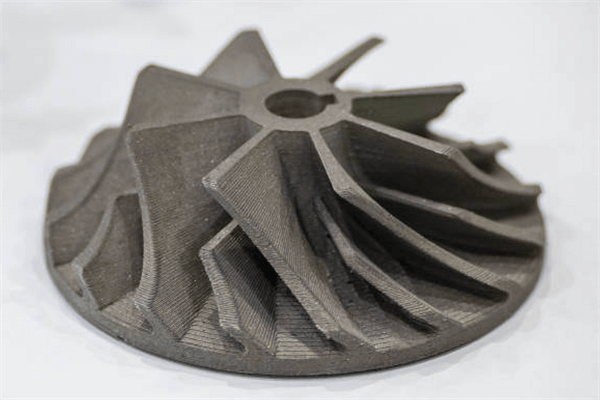
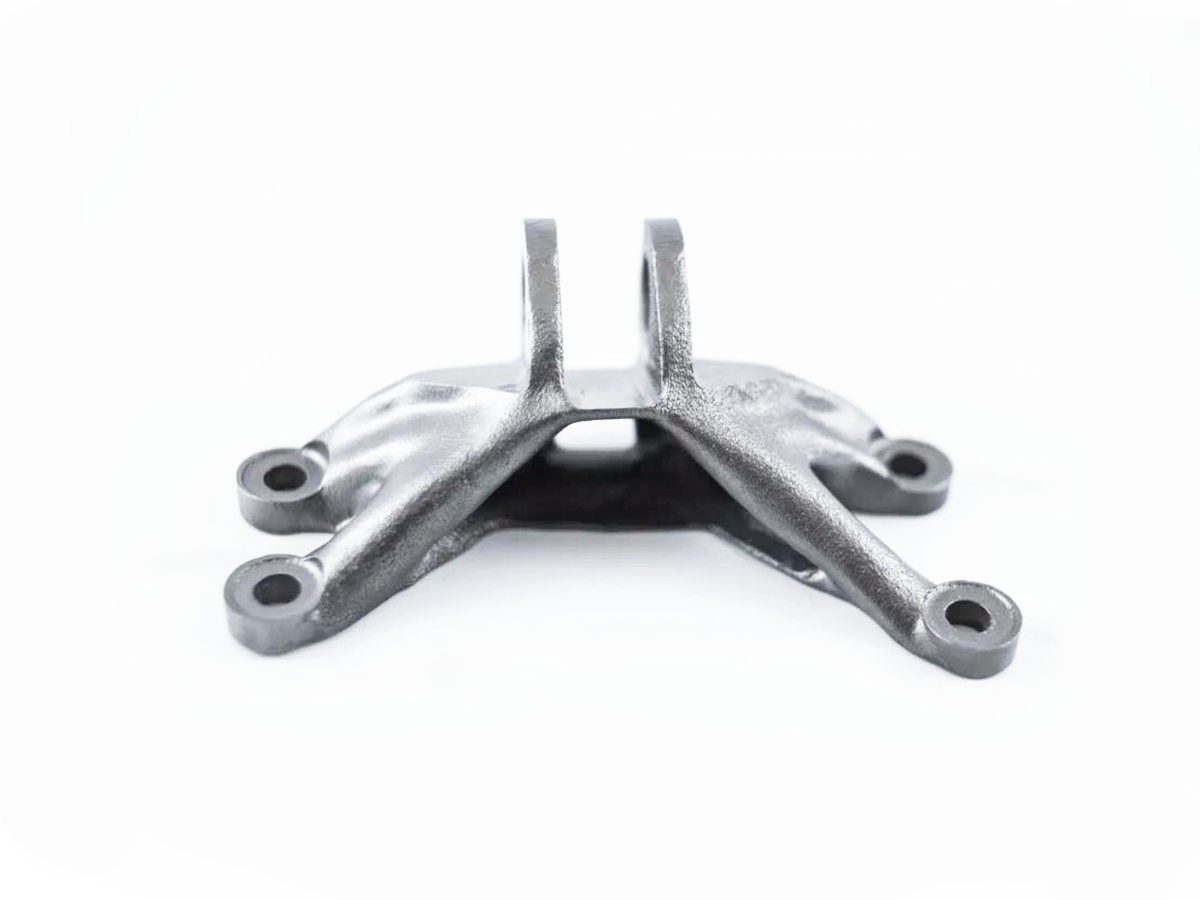
Geometry-Driven Value: Internal channels, conformal cooling, lattice structures, topology-optimized ribs, and consolidated flow paths can justify DMLS when they create measurable functional value. The geometry is not free: unsupported surfaces, trapped powder, inaccessible inspection areas, and finish-machining allowance can reduce yield or add operations. Validate the claimed mass, thermal, flow, or assembly benefit against an accepted test method before committing production capacity.
Bridge Production and Rapid Tooling: DMLS can cover a limited supply gap while hard tools for injection molding or rapid molding are being completed. It can also produce conformal-cooled mold inserts, provided tool material, heat treatment, cooling performance, wear surfaces, and repair strategy are qualified. The RFQ should identify the bridge quantity, required end date, and transition trigger so temporary additive production does not become an open-ended high-cost route.
The Hybrid Future and Alternative AM Technologies
Larger production programs often use DMLS only for the geometry that earns its cost. A hybrid process map can separate complex additive features from simpler components and assign each operation to the most controllable route.
Hybrid Manufacturing: A practical hybrid route may print a complex manifold, nozzle, insert, or near-net blank, then use conventional machining for datums and interfaces. Simpler housings or brackets can remain cast, forged, formed, or machined and be assembled with the printed component when the joining method permits. Laser powder bed fusion should not be described as a general repair or feature-deposition process on an arbitrary finished base.
High-Throughput AM Technologies: Binder Jetting separates powder shaping from furnace densification and may offer different batch economics for suitable materials and geometry. Debinding, sintering shrinkage, density, section uniformity, final tolerance, and post-sinter machining become separate controls. Compare accepted-part cost and qualification evidence with DMLS; a faster shaping step alone does not establish lower production cost or equivalent properties.
Engineering Decision Matrix: Is DMLS Suitable for Production?
Scenario | Suitability | Rationale |
|---|---|---|
Simple identical bracket with stable, recurring demand | Usually Low | Quote stamping, casting, forging, or automated machining first; DMLS needs a documented tooling, inventory, or schedule advantage to offset its full release cost. |
Consolidated fuel nozzle with inaccessible internal channels | Conditional | DMLS may be justified when flow performance and assembly reduction are verified, while build yield, powder removal, machining, NDT, and qualified monthly capacity meet demand. |
Patient-matched titanium implant from controlled digital data | Potentially High | Tool-less variation supports mass customization, but material, regulatory, traceability, cleaning, inspection, and file-control requirements must be approved for every released configuration. |
Weight-critical satellite component with low recurring demand | Potentially High | Topology and part-consolidation value can justify DMLS when the delivered material condition, proof testing, NDT, finish machining, and change-control plan are defined before production. |