Can nylon SLS parts be dyed, and what color options are available?
Yes. SLS parts made from dye-compatible PA11 or PA12 can usually be dyed, but the useful color range depends on the powder's starting color, surface preparation, dye system, and acceptance method. White or off-white nylon supports light, pastel, and vivid shades; gray nylon is normally limited to darker, more muted colors, with black being the most forgiving. Parts produced by Selective Laser Sintering (SLS) absorb dye near the surface rather than through every wall. Abrasion, ultraviolet light, hot water, and chemicals can still alter the finish. An RFQ should identify the exact nylon grade and powder color, target sample or numerical color tolerance, surface finish, service exposure, and any functional faces that require separate control.
The Dyeing Process for SLS Nylon
SLS nylon dyeing requires complete depowdering and cleaning before a controlled dye bath, followed by rinsing and drying. Loose powder absorbs dye differently from fused material and can leave pale spots, streaks, or transferable residue. Bath temperature, time, dye concentration, circulation, part loading, and prior bath use all affect shade. One published Nylon 12 White workflow uses circulating solution around 80-90°C, but that range is process-specific rather than a universal PA11 or PA12 setting. Internal cavities can trap air or make a part float, leaving undyed zones unless the part is fully submerged and the bubbles are displaced. Dye penetration is also material-dependent: published industrial-equipment data gives approximately 0.2 mm for EOS PA 2200 as one example, not a guaranteed depth for every nylon. Dyeing can therefore color complex consumer products and automation fixtures without a line-of-sight spray process, but heavy abrasion or machining after dyeing can expose the lighter core.
Color Options and Limitations
SLS nylon color options are set first by the base powder: a light substrate expands the palette, while a gray substrate shifts the practical choice toward dark shades.
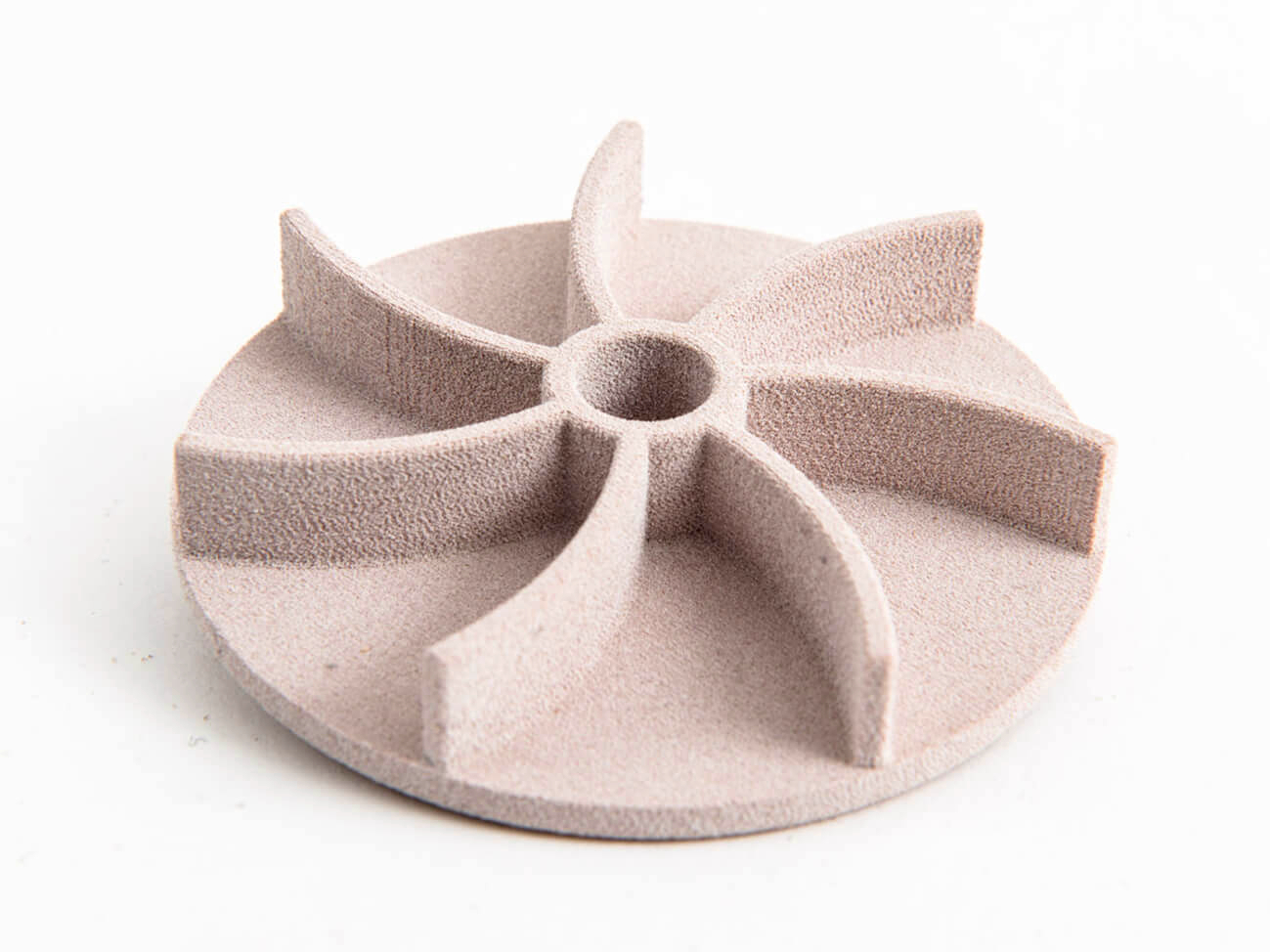
Starting Base Material: White or off-white PA12 is the better base for pastels, bright safety colors, and saturated brand colors because the substrate does not strongly darken the dye. Standard gray PA12 can accept dye, but the base remains part of the final appearance; dark blue, burgundy, green, brown, and black are more realistic than yellow or pale pink. PA11, filled nylon, and reused-powder blends require separate coupons because polymer formulation, filler, and build history can change uptake. For a controlled cosmetic requirement, a written color name is insufficient. Supply a master sample and define the permitted difference using a named method. ISO/CIE 11664-4:2019 defines CIE L*a*b* coordinates and color-difference calculations, but it does not choose an acceptance limit. The RFQ must also state the illuminant, observer, instrument geometry, surface condition, and measurement locations.
Inherent Limitations: Dyeing cannot make a dark substrate lighter, hide every build-to-build texture change, or create a glossy white film. Surface smoothing changes gloss and perceived shade even when measured color coordinates are similar. The linked powder coating guidance describes a deposited finish used mainly on suitable metal substrates; nylon needs a material-compatible paint or coating system with qualified cure temperature and adhesion. Likewise, the linked sandblasted guidance explains how blasting changes texture, but SLS media, pressure, and exposure must be qualified for the printed geometry. For an assembly, visible components should use the same powder lot, surface process, dye-bath condition, and inspection setup when shade continuity matters.
Color Fastness: Dyed nylon does not automatically gain ultraviolet, wash, chemical, or abrasion resistance. Incomplete post-dye rinsing can leave unbound color that transfers when wet, while hot washing, frequent cleaning, sunlight, and incompatible chemicals can accelerate fading. A realistic validation plan matches the service environment: compare retained coupons before and after a defined UV exposure, water soak, detergent cycle, chemical wipe, or rub test. Record temperature, duration, solution, load, and acceptance method so a later batch can be judged the same way. A colorimeter is useful for flat accessible zones, but visual inspection remains necessary on deep cavities, edges, and textured surfaces. Appearance approval also does not prove water tightness, mechanical strength, or dimensional capability.
Engineering Considerations and Alternatives
Post-Processing Integration: The normal sequence is depowder, clean, complete any qualified tumbling and deburring, dye, rinse, dry, and then apply a compatible sealer if required. Reversing that order can block dye uptake or expose undyed material. A PA12 handheld enclosure illustrates the decision: visible panels may be dyed to the approved master sample, while a sliding rail should be checked for powder residue, smoothing change, and post-process fit. Print witness coupons with the enclosure batch and finish them in the same sequence; approving only a separate smooth coupon can miss texture-driven shade differences on the actual housing.
Material-Dye Compatibility: PA11 and PA12 are not interchangeable specifications, and a dye recipe qualified for one supplier's powder should not be assumed valid for another grade, filler, or refresh ratio. Flexible TPU, mineral-filled nylon, and carbon- or glass-filled polyamide can show different absorption and base color. Parts made by FDM or SLA also need material-specific coloring trials; process name alone does not establish dye compatibility. Before production, confirm the material data sheet, printed base color, cleaning media, approved dye chemistry, and whether the supplier controls powder lot and recycled-powder proportion for color-critical batches.
Alternative Coloring Methods:
Mass-Colored Powder: A supplier-qualified, pre-colored material can reduce the contrast revealed by scratches because pigment is present throughout the feedstock. It can also restrict material availability, powder reuse, machine cleaning, and batch economics. Do not improvise by mixing pigment into standard powder at the machine; the altered formulation requires process and property qualification. For low-volume manufacturing, compare the setup burden with dyed white or gray nylon before choosing this route.
Surface Coatings: A compatible painting or coating system is preferable when the requirement is opaque white, high gloss, metallic appearance, masking, or a tightly controlled corporate color. Coatings add film thickness and can bridge text, alter snap fits, reduce bore size, or chip at edges. State masked datums, threads, seals, sliding faces, maximum film build, adhesion test, gloss range, and color acceptance in the RFQ. Use dyeing instead when a matte finish, complex internal geometry, and minimal dimensional buildup are more important than exact surface opacity.
Choose dyeing for 3D printed PA11 or PA12 parts when a matte color is acceptable and the powder, preparation, bath, and inspection method can be held consistent. Choose a white substrate for light or vivid shades and a gray substrate for dark shades, especially black. Select painting or another qualified coating for opaque white, gloss, special effects, or tightly controlled brand appearance; consider supplier-qualified pre-colored material when through-color wear behavior justifies the added material-control burden. Before approving production, evaluate actual parts and same-batch coupons after the intended surface process, then repeat the service-specific colorfastness test. That evidence is more useful than a palette image or a color name alone.