Is HIP suitable for all high-temperature alloy materials?
HIP is not suitable for every high-temperature alloy or every part made from one. It is a strong candidate when a cast, powder-metallurgy, or additively manufactured part contains sealed internal porosity and the specified alloy condition can tolerate the pressure-temperature cycle. It is a weak choice for surface-connected flaws, intentional porosity, sound wrought stock, or alloys that develop unacceptable grain, phase, chemistry, or dimensional changes. HIP suitability is therefore decided by material state, defect morphology, and the complete thermal route rather than by alloy name alone. Before specifying Hot Isostatic Pressing (HIP), the buyer should identify the exact grade and condition, starting process, target defect, permitted heat-treatment route, finish stock, and acceptance test.
Ideal Candidates for HIP Treatment
High-temperature alloys are good HIP candidates when the target defect is enclosed, pressure can create a pore-closing stress, and diffusion or creep can bond the internal surfaces without damaging the required microstructure. The decision should connect defect evidence to a measurable outcome such as internal soundness, fatigue performance, leak integrity, or tensile properties.
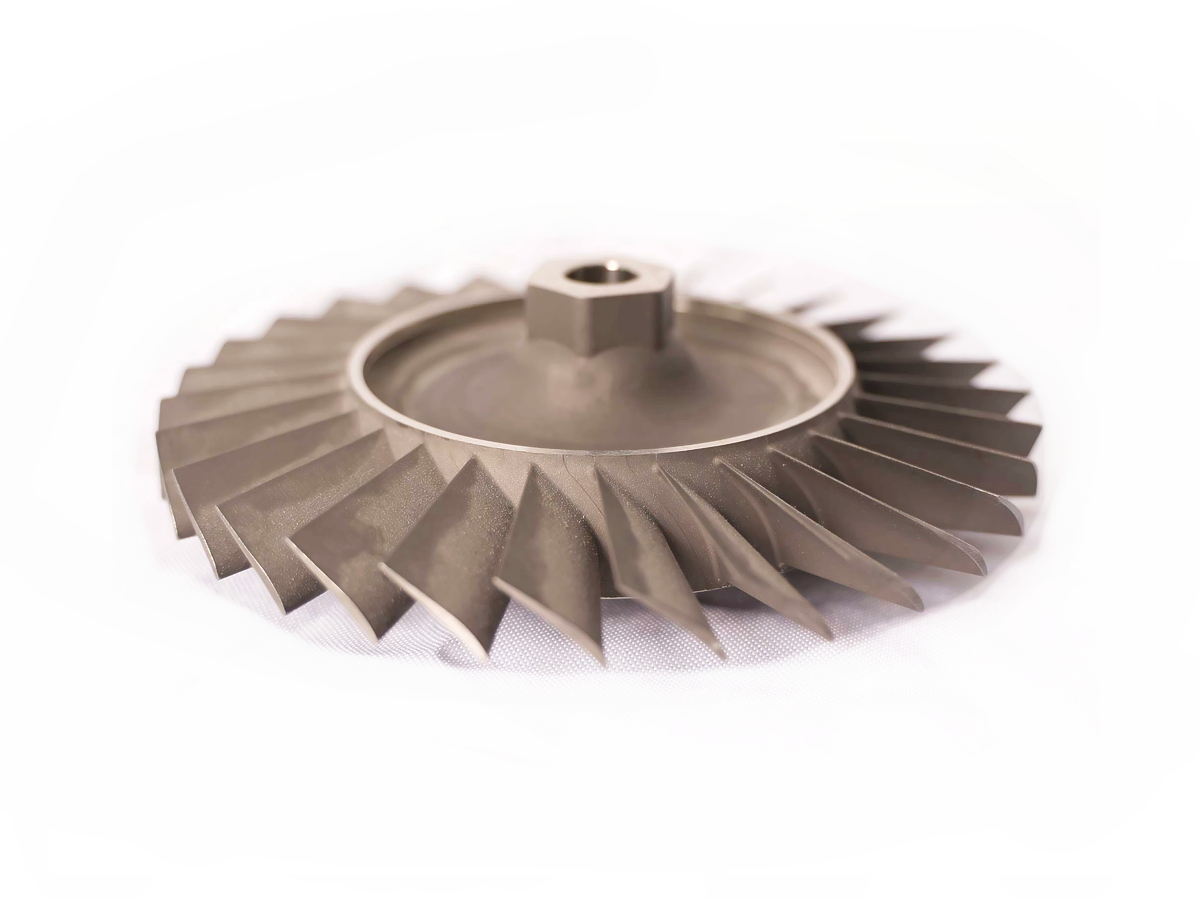
Cast Superalloys: Investment-cast components for aerospace and aviation and power generation may contain enclosed shrinkage porosity or interdendritic voids. HIP can reduce pore-driven risk in a compatible casting such as Inconel 718, but grade alone does not approve the process. Casting condition, pore connectivity, section thickness, dimensional allowance, heat-treatment sequence, and final inspection plan must support the selected cycle. Computed tomography or sectioned process-development samples can characterize internal defects, while production acceptance must use the drawing and material specification.
Additively Manufactured (AM) Metal Parts: Parts made by DMLS or SLM may contain gas pores, keyhole pores, or lack-of-fusion discontinuities. HIP can close many sealed pores, but it does not guarantee 99.99% density, isotropy, or wrought-equivalent properties. Crack-like lack of fusion, oxide-lined boundaries, trapped powder passages, and flaws connected to the exterior may survive the cycle. The qualification plan should compare the as-built and HIP conditions using defect-sensitive inspection and mechanical tests in the relevant build orientations.
Powder-Consolidated and Selected Titanium Products: Powder-metallurgy superalloys and some titanium alloys can use HIP as a consolidation route or as a step for closing residual internal voids. Suitability depends on feedstock chemistry, oxygen limits, capsule design, prior-particle-boundary condition, and the required final microstructure. A witness coupon is useful only when its material lot, thermal history, section response, and test orientation represent the part. The RFQ should state whether HIP is the primary consolidation process or a corrective post-process.
Materials and Cases Where HIP is Ineffective or Contraindicated
HIP is ineffective or contraindicated when gas pressure reaches the defect, when densification removes a functional feature, or when thermal exposure creates a larger material risk than the porosity being treated. The screening question is not whether HIP can be run; it is whether the cycle produces a specified, verifiable improvement without violating another requirement.
Alloy Chemistry or Surface Sensitivity: Some alloys, coatings, capsule materials, or surface residues can react during prolonged high-temperature exposure. The consequences can include chemistry loss, oxidation, contamination, brittle reaction layers, or a surface condition that requires removal. Risk depends on grade, atmosphere, capsule or canning route, surface-to-volume ratio, temperature, and time. The material authority should define permitted process limits and any post-HIP chemistry check, cleaning, or machining allowance.
Materials that Rely on Controlled Porosity: Filters, porous bearings, wicks, acoustic structures, and some thermal-management inserts require interconnected voids to function. Densification can reduce permeability, lubricant storage, capillary action, or acoustic response. For these products, the RFQ must identify whether porosity is an unacceptable defect or a controlled design feature, then define the required pore distribution and functional test.
Sound Wrought or Forged Products: A sound billet of wrought 304 stainless steel or a forged Aluminum 7075 part has no automatic densification need. HIP may add thermal exposure, dimensional movement, handling, and inspection cost without addressing a defined defect. It should be specified only when a qualified route identifies a relevant internal-discontinuity or bonding objective. Heat treatment, forging control, stock removal, or another manufacturing correction may address the actual risk more directly.
Surface-Connected Defects: An unsealed surface crack, open pore, or communicating channel admits pressurizing gas, so the required pressure difference across the flaw is lost. Such defects need an approved sealing or encapsulation route, redesign, repair, or rejection. Post-HIP CNC machining can remove remaining surface stock, but it cannot retroactively close a flaw that was open during HIP. Pre-HIP inspection must distinguish enclosed porosity from surface-connected discontinuities.
Metallurgical Considerations and Risks
A suitable defect is only half of the HIP decision because the alloy must also retain the specified grain structure, phases, chemistry, and dimensions. Process qualification should separate densification evidence from heat-treatment effects and should verify the final condition after all thermal and machining steps.
Grain and Dimensional Response: Excessive temperature or time can coarsen grains in sensitive alloys, while pore closure, residual-stress relaxation, and creep can move thin walls or unsupported features. The selected cycle needs enough driving force for the target voids without exceeding microstructure or dimensional limits. Inspection after final heat treatment and machining, using the drawing datums, is more relevant than chamber pressure records alone.
Phase Stability and Property Recovery: Precipitation-strengthened nickel alloys can dissolve or coarsen strengthening phases during HIP, and other alloy systems may form unwanted phases. A qualified post-HIP heat treatment may restore the specified condition, but the route must match the exact alloy and governing material specification. Mechanical coupons should verify the combined HIP and heat-treatment route, not attribute every property change to densification.
Atmosphere, Encapsulation, and Traceability: Argon exposure, leaks, capsule reactions, surface contamination, or inadequate decanning can create release problems even when internal pores close. A purchase specification should control alloy lot, starting condition, cleanliness, encapsulation method, cycle record, furnace identification, thermocouple data, and nonconformance handling. Traceability proves process conformity; it does not by itself prove that the target defect was removed.
Engineering Verdict
Specify HIP for a high-temperature alloy only when four questions have documented answers: Is the target defect enclosed and closable? Can the alloy and geometry tolerate the full cycle? Which downstream heat treatment and machining steps establish the final condition? Which inspection or mechanical test proves the required improvement? The RFQ should include grade and condition, manufacturing route, defect maps or inspection evidence, CAD and drawing datums, minimum wall and finish stock, prohibited phases or grain limits, approved thermal specification, NDE sensitivity, coupon correlation, and acceptance criteria. If those inputs cannot connect a defect mechanism to a verifiable result, HIP is not yet a justified production requirement.