How Should Prototype Material Match a Rapid-Machining Test?
How Should Prototype Material Match a Rapid-Machining Test?
Prototype material should match a rapid-machining test only to the extent required by the mechanism being evaluated. Geometry, access, and assembly clearance may permit an approved representative material; wear, heat, corrosion, sealing, electrical contact, and load tests usually require the production designation and condition. The buyer should define the test question, material boundary, certificate scope, and transfer decision before ordering.
Start With the Mechanism
State whether the prototype tests envelope, tool access, motion, load, friction, surface interaction, thermal response, or an inspection method. A clearance test needs mating geometry and assembly state. A load test needs direction, support, duration, and temperature. A wear test needs cycles, counterface, lubrication, and acceptance. Material choice follows the mechanism, not the color or finish shown in a photograph.
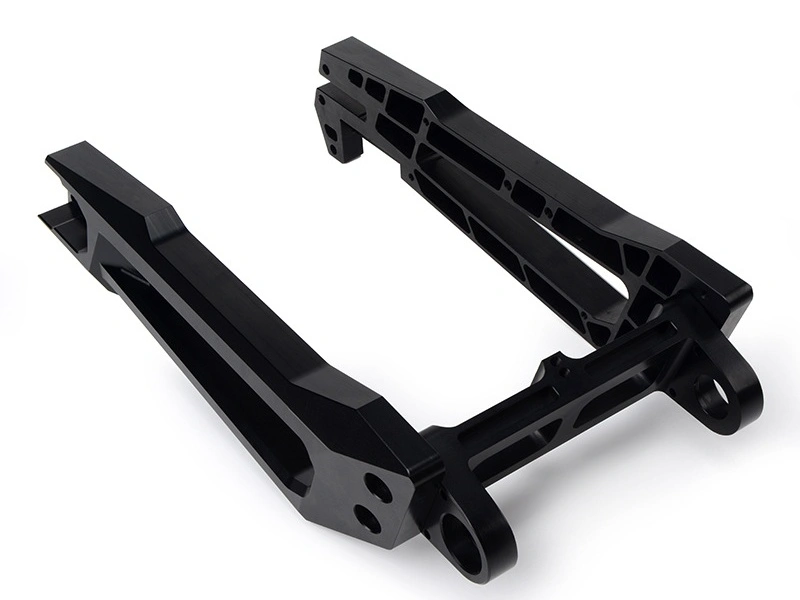
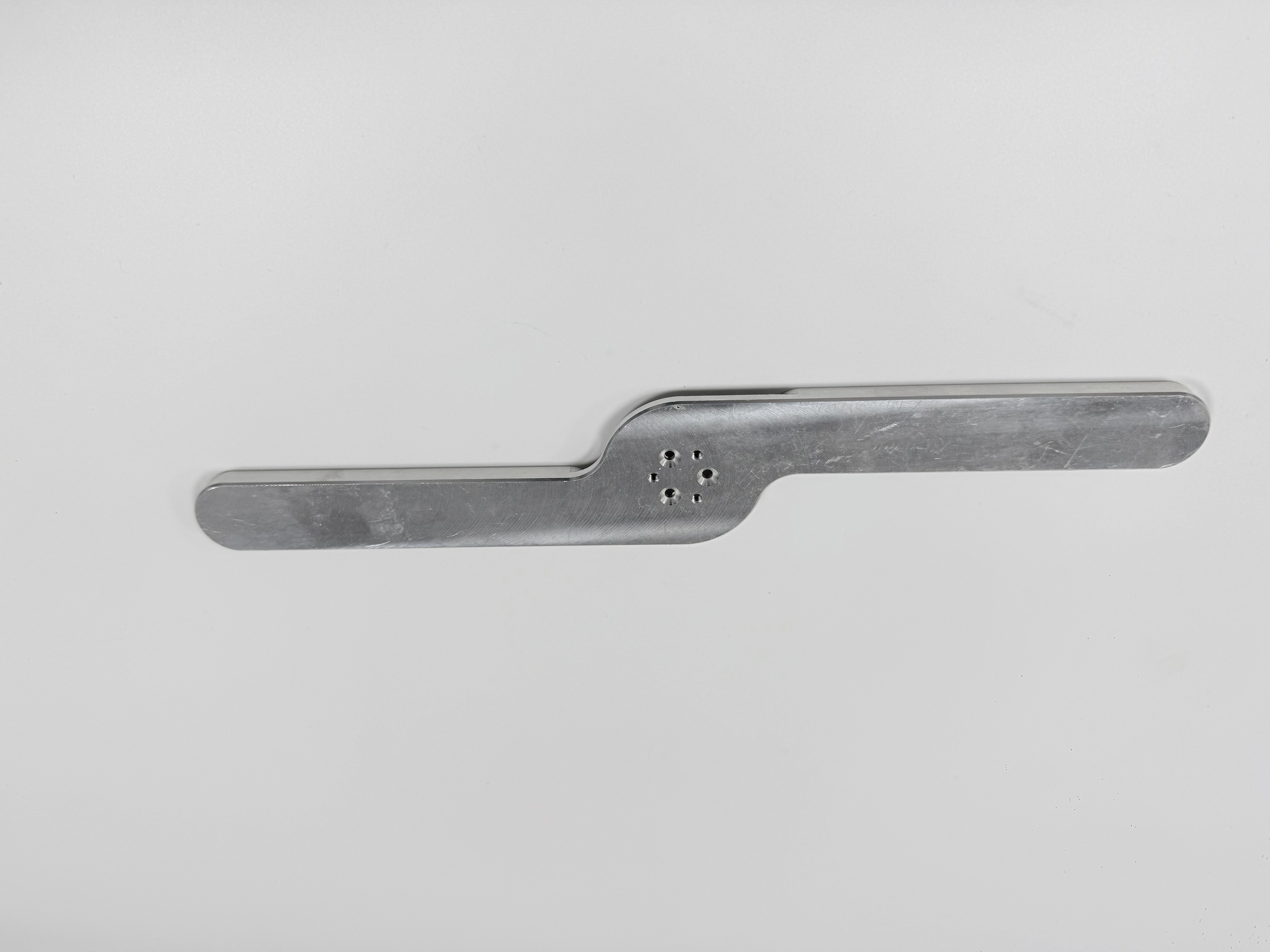
The matte link-arm views show a long body, recessed channels, a central circular area, and rounded ends from two angles. They confirm visible geometry only. They do not establish alloy, heat treatment, strength, tolerance, load, or intended application. Use them to prompt interface questions, and obtain material requirements from the controlled drawing and test plan.
Record Designation and State
Record material designation, temper or condition where applicable, stock source, heat or lot, certificate scope, and any substitution. A certificate supports identity within scope; it does not prove finished geometry, hardness after processing, roughness, or function. If the prototype uses a substitute, list which conclusions transfer and which require a production-material build.
Include heat treatment, coating, cleaning, aging, and storage when they influence the result. Coating can change a mating dimension, cleaning can change residue or friction, and heat treatment can change distortion. Record before-and-after state, processor or batch, and the recheck required before a conclusion is accepted.
Separate Material Learning From Geometry Learning
A prototype can answer tool access while leaving strength untested. Keep those conclusions separate. If an alternate material changes burrs, tool wear, or distortion, record that effect as a limitation. Do not call a successful fit proof of equivalence when the material-dependent mechanism was not tested.
Use a Material-Test Table
| Question | Material requirement | Transfer boundary |
|---|---|---|
| Envelope or access | Representative geometry and stiffness if approved | Does not prove durability |
| Load or wear | Production designation and condition | Result applies to stated environment |
| Thermal or corrosion | Production state and exposure | Do not generalize outside cycle |
| Inspection learning | State that reproduces measurement behavior | Method still needs validation |
The table keeps material claims bounded. A CNC prototyping workflow can organize learning, while a quality inspection plan can organize evidence. Neither replaces the approved test definition.
Put Material Match in the RFQ
Attach drawing revision, material and condition, test objective, mating hardware, CTQs, finish, outside processing, certificate requirements, and record format. Ask suppliers to identify substitutions, stock limits, heat-treatment route, coating effect, and storage assumptions before cutting. Require notification before material, processor, tool, fixture, program, inspection, or packaging changes.
Request separate pricing for exploratory and production-material builds. Ask which dimensions, tests, or functions must be repeated after the material state changes. This prevents a fast prototype quote from hiding the evidence needed for a valid production decision.
Review the material decision with design, quality, and test owners together. Design may accept representative stiffness for an envelope check while quality requires production-grade traceability for a release sample. Record those different boundaries in the same package. If the prototype is cut from a remnant or mixed stock, identify the source and decide whether that condition supports the intended test.
Control Handling and Storage
State how the prototype is protected between machining and testing. Moisture, contamination, cleaning chemistry, oxidation, or a long delay can change friction, surface condition, or fit. Record packaging, storage duration, and any re-cleaning or reinspection before the test. If the part is disassembled, identify whether the same mating surfaces and fastener state are used on the next trial.
Review Substitution Before Cutting
When a substitute is proposed, compare density, stiffness, thermal response, surface behavior, and machinability only where they matter to the question. Do not call two materials equivalent because they produce a similar finish or because the prototype assembles once. Require an approval that names valid conclusions, invalid conclusions, and the production-material build needed next.
Keep the certificate, supplier statement, and approval with the prototype identifier. A material document without a unit or heat link is weak evidence; a unit label without a material record is equally incomplete. The handoff should show the exact chain from stock to test.
Buyer Action
Write the test mechanism, required material state, environmental condition, evidence scope, and transfer rule in the order. At review, compare actual stock, certificate, process state, and test result. Hold the conclusion when the tested material cannot represent the mechanism or the record chain is incomplete.
Buyer Action
Define mechanism, material state, environment, and transfer boundary. At review, compare certificate, geometry, test condition, and result to the intended question. Treat material as evidence scope, not a cosmetic choice.