How Should Prototype Learning Be Documented?
How Should Prototype Learning Be Documented?
Prototype learning should be documented as a controlled question, observed condition, evidence, decision, owner, and next action. The record should distinguish released requirements, production controls, design learning, temporary assumptions, and non-transferable results. This prevents a fast build from becoming a collection of undocumented opinions or from turning an exploratory result into a production promise.
Define Question and State
State whether the prototype tests clearance, access, fit, load, motion, material behavior, surface interaction, inspection, or packaging. Record drawing and model revision, material and condition, fixture, tool, test environment, mating hardware, support, and measurement state. A result without those fields may be impossible to interpret later.
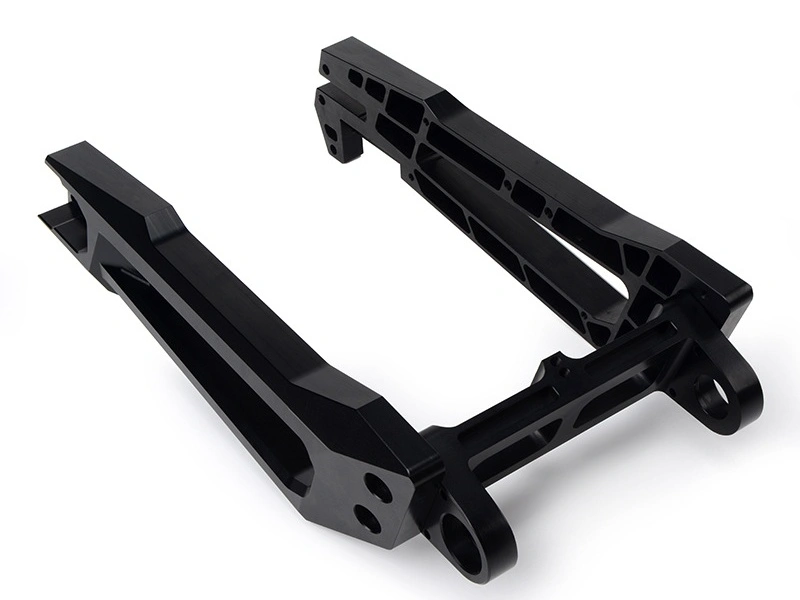
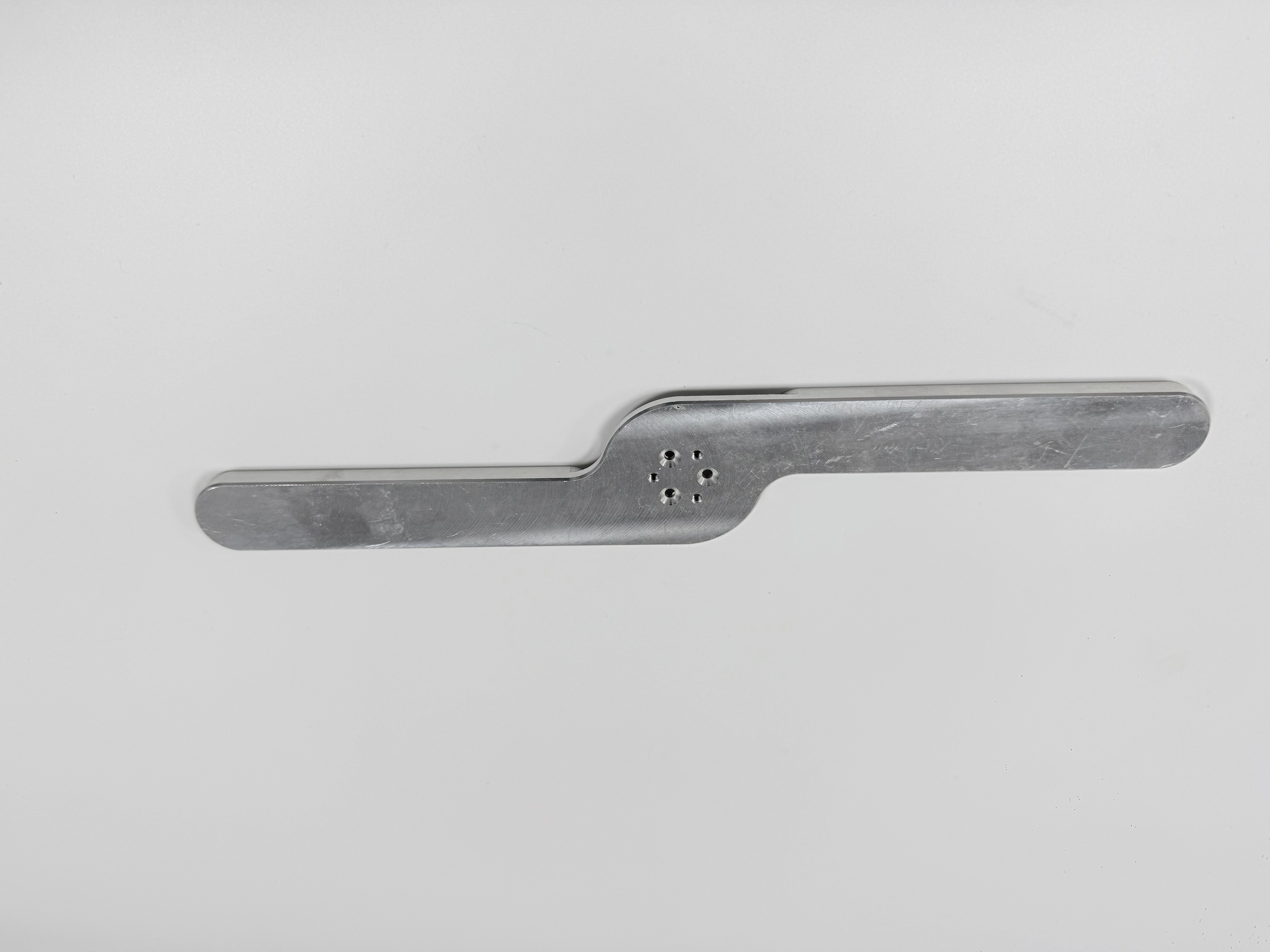
The link-arm images show a long body, recessed channels, central circular area, and rounded ends from different angles. They support visual geometry only. Do not use them to infer material, application, load, tolerance, or customer outcome.
Capture Observation and Evidence
Keep raw dimensional data, functional readings, fixture checks, photographs, material certificates, deviations, and rework history. Identify prototype serial or sample, method, units, instrument, operator or owner, and record revision. Preserve failed results when they help determine cause. If a result is corrected, retain the original, reason, date, and approver.
Classify the observation: design change, process control, fixture or tooling requirement, test limitation, or open question. If a feature was not measured because access was unavailable, record the gap rather than marking it accepted.
Make Decision and Action Explicit
For each observation, state pass, fail, conditional use, or open; identify evidence that supports the decision; assign owner and due revision; and define the event that reopens the question. A successful functional test validates the stated condition, not production repeatability or service life. A dimensional report does not silently prove function.
Use a Learning Record
| Field | Question | Boundary |
|---|---|---|
| Objective | What decision must the build support? | Do not mix unrelated questions |
| Condition | What revision, material, fixture, and test state applied? | Result is state-bound |
| Evidence | What raw result or observation exists? | Keep method and units visible |
| Action | What changes or remains open? | Assign owner and trigger |
The table organizes learning, not conformity. A CNC prototyping workflow can structure revisions, while a quality inspection plan can structure evidence ownership.
Put Learning Records in the RFQ
Specify prototype objective, revision, material, fixture, test, CTQs, records, open actions, retention, and approval. Ask suppliers for an anonymized report or traveler format that separates learning from production acceptance. Require notification before material, tool, fixture, program, route, processor, inspection, packaging, or ownership changes.
Request a transfer list and a not-transferred list. Temporary dimensions, hand finishing, substitute materials, exploratory fixtures, and untested conditions should remain visibly bounded.
Buyer Action
Approve the question, evidence fields, decision categories, owners, and retention before the build. Close actions only when evidence exists or an authorized decision accepts the limitation.
Review Learning Quality
Ask whether each observation changed a design decision, a process control, a test method, or only the prototype schedule. A shorter cycle time is not learning unless it preserves the intended evidence. A polished appearance is not learning about strength or fit. Keep the reason for every decision so another engineer can understand why a feature was retained, revised, or deferred.
When several prototypes are compared, list the variables that changed between builds. Do not attribute an improvement to geometry if material, fixture, tool, or test condition also changed. If the cause remains uncertain, define the next experiment and the evidence needed to separate variables. This makes the learning record useful for design review and purchasing.
Request a Consistent Learning Format
Ask suppliers to return objective, revision, material, fixture, test state, raw results, conclusion, open actions, owner, and next revision in a consistent format. Require notification when a result is corrected, reworked, or repeated. The format should preserve failed results and show the boundary of any conditional use.
Keep a not-transferred list beside the transfer list. Temporary dimensions, hand finishing, substitute materials, exploratory fixtures, and untested environments should remain visible. Naming exclusions prevents a later production team from treating every prototype note as a released requirement.
At review close, reconcile every open action with the next revision owner and due date. An action is not closed by a verbal agreement; it closes when specified evidence or an authorized limitation is recorded. If a prototype moves to an external lab, preserve the unit identifier and returned file with the same learning record.