How Should a Prototype Quote Define Test Scope?
How Should a Prototype Quote Define Test Scope?
A prototype quote should define the drawing and model revision, material and condition, learning question, quantity, CTQs, fixture or test method, inspection state, functional test, finish, records, milestones, and change boundary. A unit price without those fields can hide setup, fixture, testing, rework, or evidence work. The buyer should compare quotes by what decision each includes and what remains open.
Attach the Controlled Package
Provide part number, revision, CAD and drawing, material, stock, tolerance intent, surface and edge requirements, access constraints, mating hardware, test environment, and record format. Identify temporary or exploratory features. If the prototype is not production material or fixture, state that limitation and the follow-up build required for transfer.
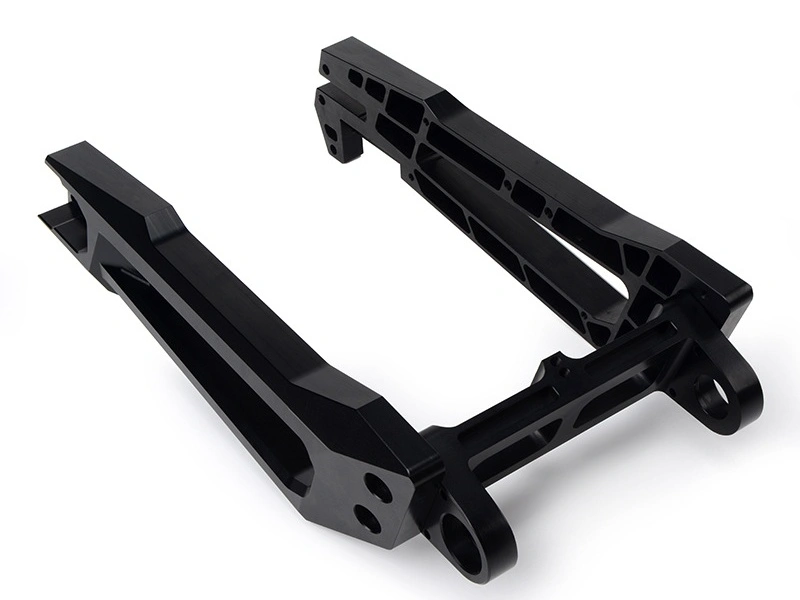
The matte link-arm views show visible geometry from two angles but do not prove alloy, load, tolerance, function, or application. Use the images for identification only; quote scope must come from the controlled documents and test definition.
Separate Cost Categories
Ask for separate engineering review, programming, fixture, first-piece, functional test, inspection, material, machining, outside processing, packaging, freight, and follow-up validation costs. A low machining price may omit the fixture or test evidence required to answer the question. Request assumptions for rework, material substitution, storage, and schedule changes.
Define which checks are included for every unit and which are sampled. State the reaction to a failed or missing result. A dimensional report, fit check, or test summary supports only its stated method and condition.
Define Deliverables and Gates
List raw measurement data, signed summary, material certificate, fixture description, functional test record, photographs, deviations, rework history, and open-action list. Set gates for revision approval, first unit, test, post-process state, and transfer. Assign owner and approval for each gate.
Use a Quote Scope Table
| Scope item | Buyer question | Boundary |
|---|---|---|
| Build | What revision, material, and quantity are priced? | Do not mix exploratory and release parts |
| Evidence | Which dimensions and tests are delivered? | State method and condition |
| Fixture | What support and configuration are included? | Recheck after modification |
| Transfer | What production learning is approved? | List exclusions and open actions |
The table keeps quotes comparable. A CNC prototyping workflow can frame learning, and a quality inspection plan can frame evidence, but neither is a substitute for the part-specific scope.
Write Change Notification
Require notice and approval before changes to material, tool, fixture, program, route, processor, inspection method, packaging, ownership, or test condition. Ask when a new first-piece or repeat test is required. Preserve old and new values, affected units, reason, approver, and resume condition.
Buyer Action
Approve the quote scope, evidence, cost categories, gates, and change rules before release. Select a proposal whose deliverables answer the prototype question without disguising unresolved production risk.
Define the Test Environment
State temperature, humidity, fluid, load, cycle, speed, support, mating hardware, and reset procedure when they influence the decision. Identify who supplies the fixture and whether calibration or verification is included. A quote that lists a test name without its condition is not comparable to one that includes raw data and a pass rule.
If the test is destructive, state the number of units reserved, dimensional checks before exposure, and disposition afterward. If the test is repeated after a revision, separate the new build cost from the original quote and identify which evidence is reused. This keeps commercial scope aligned with the learning plan.
State Change and Rework Boundaries
Define what happens if the first unit reveals a design, fixture, material, or inspection issue. Ask whether an offset correction, rework, replacement, new fixture, or new prototype revision is included or quoted separately. Require preservation of the original result and identify who approves disposition. A “minor adjustment” can still change a CTQ or invalidate a test comparison.
Include notification before material, tool, fixture, program, route, processor, inspection method, packaging, ownership, or test-condition changes. State the event that reopens qualification and the evidence needed before a revised quote or schedule is accepted.
Specify the Delivery Index
Request a delivery index listing part number, revision, unit or sample, material record, route or fixture, dimensional report, functional test, outside-process certificate, deviations, rework, and open actions. Ask for file format, naming, retention, and owner. A generic inspection certificate does not reveal whether the result belongs to the correct prototype configuration.
For partial shipments, define lot identity, acceptance status, remaining quantity, and revised milestone. For stored parts, state packaging and reinspection conditions. The index should let design, quality, and purchasing retrieve the same evidence without relying on the supplier’s author.
Compare Suppliers by Scope Completeness
Compare route, setup, material, fixture, test, inspection, records, change control, schedule, and cost assumptions side by side. A low price that omits fixture verification or raw test data is not equivalent to a complete proposal. Ask each supplier to list exclusions and unresolved assumptions. The most useful response makes both included work and remaining risk visible.
Use a CNC prototyping workflow to frame learning stages and a quality inspection plan to frame evidence fields. These references organize questions; they do not establish price, lead time, or production capability for this part.