How Can Prototype Revisions Remain Traceable?
How Can Prototype Revisions Remain Traceable?
Prototype revisions remain traceable when drawing, model, CAM reference, material record, fixture, inspection template, test report, photographs, and label share a controlled identifier. Every change should show what changed, why, which units are affected, what evidence is required, and who approved the next step. The buyer should isolate units made before and after a change and never edit an old result to represent a new configuration.
Use One Revision Identifier
Apply the same part number and revision to the drawing, model, program reference, setup sheet, material certificate, inspection report, test report, and package label. If a file is exploratory, mark it as such and keep it separate from the release candidate. A prototype can move quickly between design and machining; the identifier keeps a favorable result from being attached to the wrong geometry.
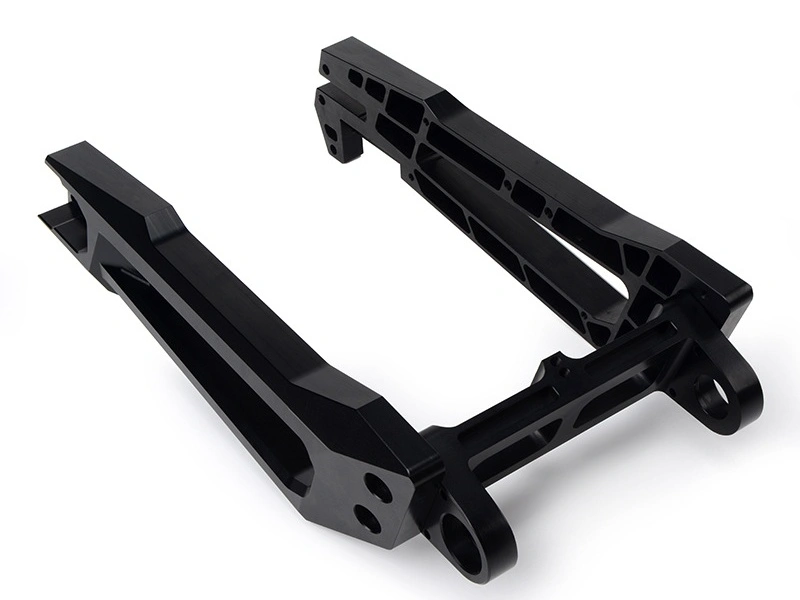
The polished link-arm views show one visible component from different angles. They do not establish revision, material, load, tolerance, or application. Store the image pair as visual evidence only and link it to the actual prototype identifier.
Record Each Change Event
Capture old and new values, effective date, reason, affected units, risk to CTQs, owner, approval, and recheck. A new hole position, radius, material condition, fixture contact, toolpath, or test support can alter the result. If an urgent change is accepted, define containment and expiry. Preserve rejected, expired, or superseded requests so they cannot be mistaken for active instructions.
Classify changes as design, process, material, tooling, fixture, inspection, test, or packaging. The classification helps identify evidence. A drawing change may require a new prototype; a fixture change may require a repeat test; a material change may invalidate a durability conclusion even when geometry is unchanged.
Link Evidence to the Unit
Identify prototype serial or sample, material heat, machine or route, tool and fixture configuration, operator or owner, inspection state, test environment, and record version. Keep raw data and corrected records together. If a result is missing or uses the wrong revision, mark it invalid and define the disposition rather than silently replacing it.
Use a Traceability Table
| Artifact | Trace key | Change response |
|---|---|---|
| Design | Drawing/model revision | Identify affected geometry |
| Build | Material, route, tool, fixture | Isolate unit boundary |
| Verification | Method, state, result, owner | Repeat or disposition invalid data |
| Decision | Approval and open action | Set next revision condition |
The table supports retrieval, not conformity by itself. A quality inspection planning reference can organize records; the controlled prototype package defines acceptance.
Put Revision Control in the RFQ
Provide drawing and model revision, prototype objective, material, fixture, test, CTQ, record, and change-notification requirements. Ask suppliers to identify how they segregate units, retain superseded files, and approve a new first-piece or test after a change. Require notification before material, tool, fixture, program, route, processor, inspection, packaging, or ownership changes.
Request an anonymized change form or traveler extract. A generic configuration-control statement is weaker than a record showing old/new values, affected units, evidence, and approver.
Buyer Action
Approve the identifier, artifact list, change form, unit boundary, and recheck rule before the prototype starts. Keep every conclusion attached to the exact configuration tested.
Use a simple retrieval test before the design review: select one prototype and locate its drawing, material record, fixture version, inspection results, test data, and approval without relying on the author. Record any missing link as an open action. Retrieval proves that the package is findable, not that the prototype passes, but it prevents a later handoff from losing the evidence chain.
Keep filenames and labels stable enough for a reviewer to distinguish revision, unit, and status. Do not use “final” as the only identifier. If a file is corrected, retain its prior version and record the correction reason, date, and approver. If a prototype is scrapped, preserve its record and mark the physical disposition rather than reusing its number for a replacement.
At each design review, reconcile the list of open actions with the current revision. Close an action only when the required evidence exists or an authorized decision explicitly accepts the remaining limitation. This prevents a fast prototype schedule from silently carrying unresolved risk into production.
When a prototype is sent to an external test laboratory or finishing processor, include the revision and unit identifier in the transfer record. Request the returned data in a format that preserves those identifiers, and record any condition change during transit. External handling does not break traceability when the handoff boundary is explicit.
Review the returned file before closing the handoff.