What strength levels do 316L and 7075 typically reach after 3D printing?
Qualified laser powder bed fusion 316L commonly falls around 500-700 MPa ultimate tensile strength, 400-550 MPa 0.2% yield strength, and 30-50% elongation across documented supplier process windows. Unmodified 7075 has no equally defensible general LPBF strength because hot cracking can invalidate a tensile result before comparison with wrought 7075-T6. Buyers should require the exact alloy variant, build orientation, heat treatment, tensile-test method, coupon location, density evidence, and crack-inspection result before accepting either material's reported strength.
316L Stainless Steel DMLS Properties
DMLS-produced 316L can reach the stated strength range when powder chemistry, melt density, orientation, surface condition, and thermal route are controlled. Rapid solidification creates a fine cellular structure and high dislocation density, often raising yield strength above annealed wrought 316L. ASTM F3184-16(2023) covers powder bed fusion components made from UNS S31603; it defines a procurement specification, not a guarantee that every build or feature has one property value.
As-Printed (DMLS) Typical Mechanical Properties:
Ultimate Tensile Strength (UTS): 500 - 700 MPa is a useful screening envelope across documented LPBF supplier windows; the production report must identify specimen orientation, final condition, and test method.
Yield Strength (0.2% Offset): 400 - 550 MPa can be used for early comparison, but design acceptance needs build-specific coupon data after the specified stress relief or anneal.
Elongation at Break: 30 - 50% is possible in qualified conditions; lack-of-fusion porosity, rough coupon surfaces, oxygen pickup, or an unfavorable orientation can reduce ductility.
Comparison with Wrought 316L (Annealed):
UTS: About 485 MPa is a common ASTM A240 annealed plate, sheet, and strip reference minimum; other product forms follow their applicable specification.
Yield Strength: About 170 MPa is the corresponding common annealed reference, so LPBF 316L may show higher yield strength without being interchangeable with wrought stock.
Elongation: About 40% is a common reference minimum, but a valid comparison uses the same gauge geometry, test direction, surface condition, and acceptance standard.
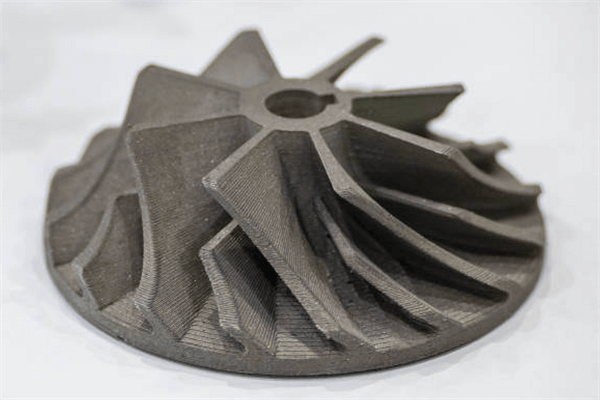
Key Takeaway: The as-built or stress-relieved LPBF condition can have significantly higher yield strength than annealed wrought 316L, yet coupon strength does not clear fatigue, leak, or corrosion risks in a finished part. For a thin-bladed pump rotor, a passing tensile coupon still leaves blade-root porosity and rough-surface fatigue as separate failure modes. Critical medical device and aerospace and aviation RFQs should pair coupon results with the NDT and functional tests required by the part.
Effect of Heat Treatment: Stress relief reduces residual stress and can stabilize dimensions, while solution annealing changes the cellular structure and may move strength and ductility toward annealed wrought behavior. The purchase specification should name the final condition; comparing an as-built coupon with a solution-annealed part produces the wrong engineering conclusion.
7075 Aluminum Alloy DMLS Properties
Unmodified 7075 aluminum has no reliable general LPBF strength level because its Al-Zn-Mg-Cu chemistry is highly susceptible to solidification cracking during rapid melting and cooling. A supplier may qualify a modified powder, grain-refiner addition, build-plate temperature, parameter set, and aging cycle, but the resulting material is a process-specific route. A label reading only “3D-printed 7075” is not equivalent to wrought 7075-T6.
As-Printed (DMLS) Typical Mechanical Properties (if crack-free processing is achieved):
Ultimate Tensile Strength (UTS): Do not assign a general design value to unmodified LPBF 7075; use the approved supplier's result for the exact powder modification, orientation, density, and heat treatment.
Yield Strength (0.2% Offset): A yield value is meaningful only after crack-free processing and the specified precipitation-aging route are demonstrated on representative coupons.
Elongation at Break: Low or scattered elongation is a stop signal for microcracking, oxide films, lack of fusion, or pore populations that a mean tensile strength can hide.
Comparison with Wrought 7075-T6:
UTS: About 570 MPa is a familiar wrought T6 reference, but the applicable minimum changes with product form and thickness and cannot be transferred to LPBF material.
Yield Strength: About 500 MPa is another wrought T6 reference tied to a controlled solution treatment, quench, artificial aging cycle, and material specification.
Elongation: About 10% is a common wrought reference; printed material must be tested separately because cracks and porosity can reduce ductility before static strength appears unacceptable.
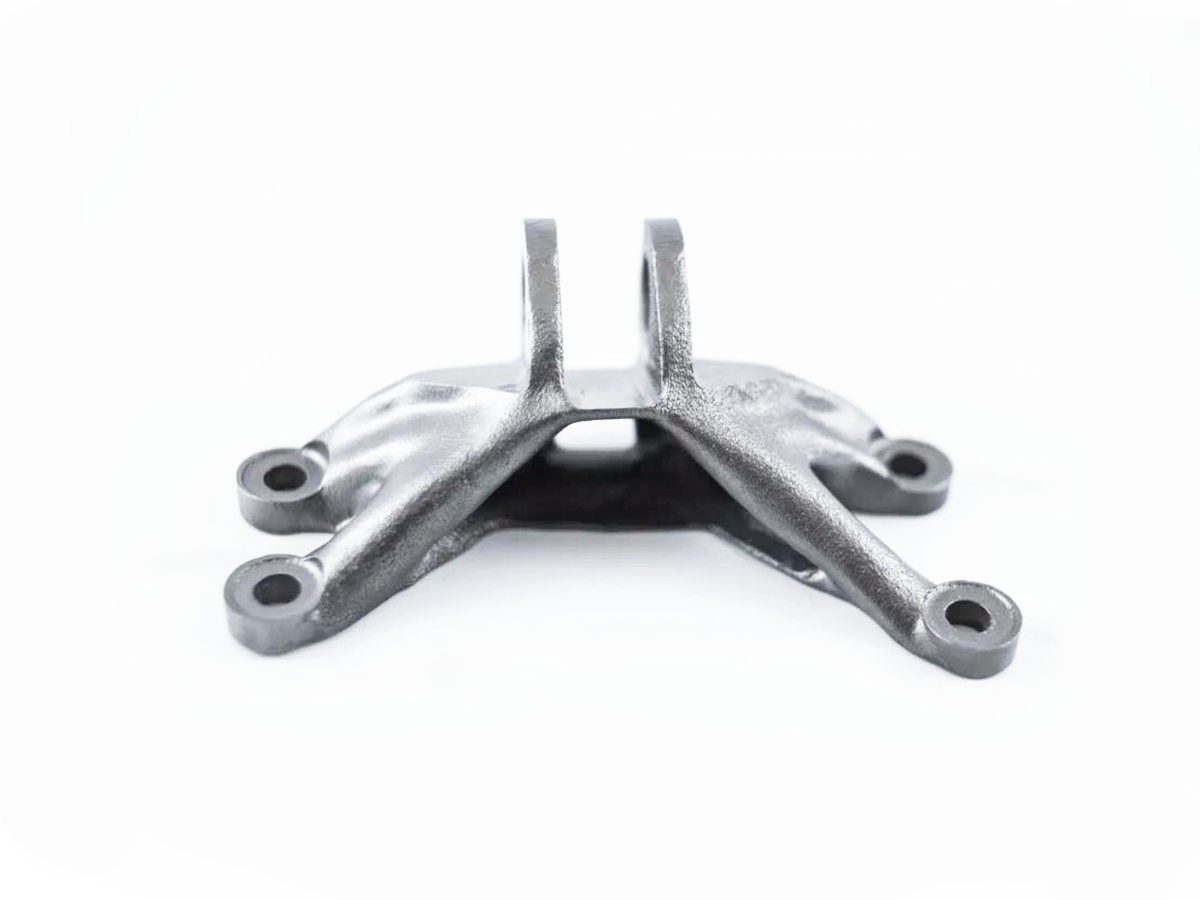
Key Takeaway: Standard 7075 should not enter a structural LPBF drawing with a copied wrought-T6 allowable or an assumed drastically lower strength and ductility range. The decision is binary: qualify a named crack-control route with acceptance evidence, or select a more printable aluminum alloy. For a flight bracket, crack inspection and orientation-matched coupons are release conditions, not optional documentation after the build.
Specialized Approaches & Alternatives:
Nanoparticle Functionalization: Published research and specialist routes use Zr-bearing grain refiners or ceramic nucleants to promote fine equiaxed grains and suppress hot cracking. This changes the feedstock and process definition. Procurement should require powder identity, density, tensile data, heat-treatment condition, metallography or qualified crack NDT, and lot/build traceability.
Alternative Aluminum Alloys for DMLS: For many production RFQs, AlSi10Mg or Scalmalloy® is more practical than unmodified 7075 because established LPBF parameter and aging routes are available from qualified suppliers.
AlSi10Mg offers a more mature printability route, but strength and elongation still depend on powder, orientation, porosity, stress relief, and aging; use the approved supplier datasheet and coupon result.
Scalmalloy® is a proprietary high-strength aluminum route. Availability, license, powder source, heat treatment, cost, and supplier qualification must be resolved before its published properties become RFQ acceptance values.
Summary and Engineering Implications
Material & Condition | Ultimate Tensile Strength (MPa) | Yield Strength (MPa) | Elongation (%) |
|---|---|---|---|
316L (DMLS As-Printed) | 500 - 700 as a screening envelope; verify orientation and final condition | 400 - 550; verify after the specified thermal route | 30 - 50 when porosity, surface condition, and oxygen are controlled |
316L (Wrought Annealed) | ~485 ASTM A240 reference minimum for applicable product forms | ~170 corresponding common annealed reference | ~40; confirm product form, thickness, and test method |
7075 (DMLS As-Printed - if achievable) | No general value for unmodified LPBF 7075; supplier qualification required | No general value; qualify crack control and aging | Reject unexplained low or scattered results; investigate cracks and porosity |
7075 (Wrought T6) | ~570 as a product-form-dependent wrought reference | ~500 as a product-form-dependent wrought reference | ~10 as a common reference, not an LPBF value |
AlSi10Mg (DMLS + Aged) | Use approved supplier data for the named condition | Verify with orientation-matched coupons | Confirm after the specified stress relief and aging |
Scalmalloy® (DMLS + Aged) | Use licensed supplier data for the named condition | Verify the proprietary process and aging route | Confirm coupon orientation, surface, and test method |
Engineering Guidance:
For High-Strength Stainless Applications: Select LPBF 316L when corrosion-resistant geometry and the qualified mechanical-property window fit the load case. State ASTM F3184 if applicable, the tensile-test method, final thermal condition, coupon orientation, NDT, and part-level acceptance. passivation can address surface cleanliness after finishing but cannot repair porosity or prove fatigue strength.
For High-Strength Aluminum Applications: If 7075 chemistry is mandatory, qualify the exact modified feedstock and crack-control route. If function permits substitution, compare AlSi10Mg and Scalmalloy® using the same load, temperature, corrosion, fatigue, and cost requirements. anodizing is a surface requirement and does not raise the accepted bulk tensile strength.
Always Validate: A release-ready RFQ identifies material designation and permitted modification, powder lot traceability, build orientation, final heat treatment, coupon number and location, test standard, density or porosity method, crack NDT, acceptance values, and any functional proof or fatigue test tied to the production route.