Stainless Steel Deep Hole Drilling for Industrial Equipment: A Case Study on Efficiency and Accuracy
Stainless Steel Deep Hole Drilling for Industrial Equipment: A Case Study on Efficiency and Accuracy
Deep hole drilling is often required in industrial equipment parts where fluid transfer, lubrication, cooling, weight reduction, or internal structural function depends on long, straight, and accurate internal passages. When these parts are made from stainless steel, the machining challenge increases because the material tends to generate heat, resist cutting, and create burrs if the process is not planned correctly. That is why many buyers evaluating CNC Drilling for stainless steel parts eventually need a more specialized deep hole drilling route instead of ordinary drilling alone.
This article focuses on the commercial and manufacturing logic behind deep hole drilling service for stainless steel industrial equipment components. Rather than describing deep hole drilling as a generic machining process, this case-style discussion explains why it matters for efficiency, what accuracy risks buyers should watch, and how a stable drilling strategy supports real equipment parts in low-volume and repeat production.
Why Stainless Steel Parts Often Need Deep Hole Drilling
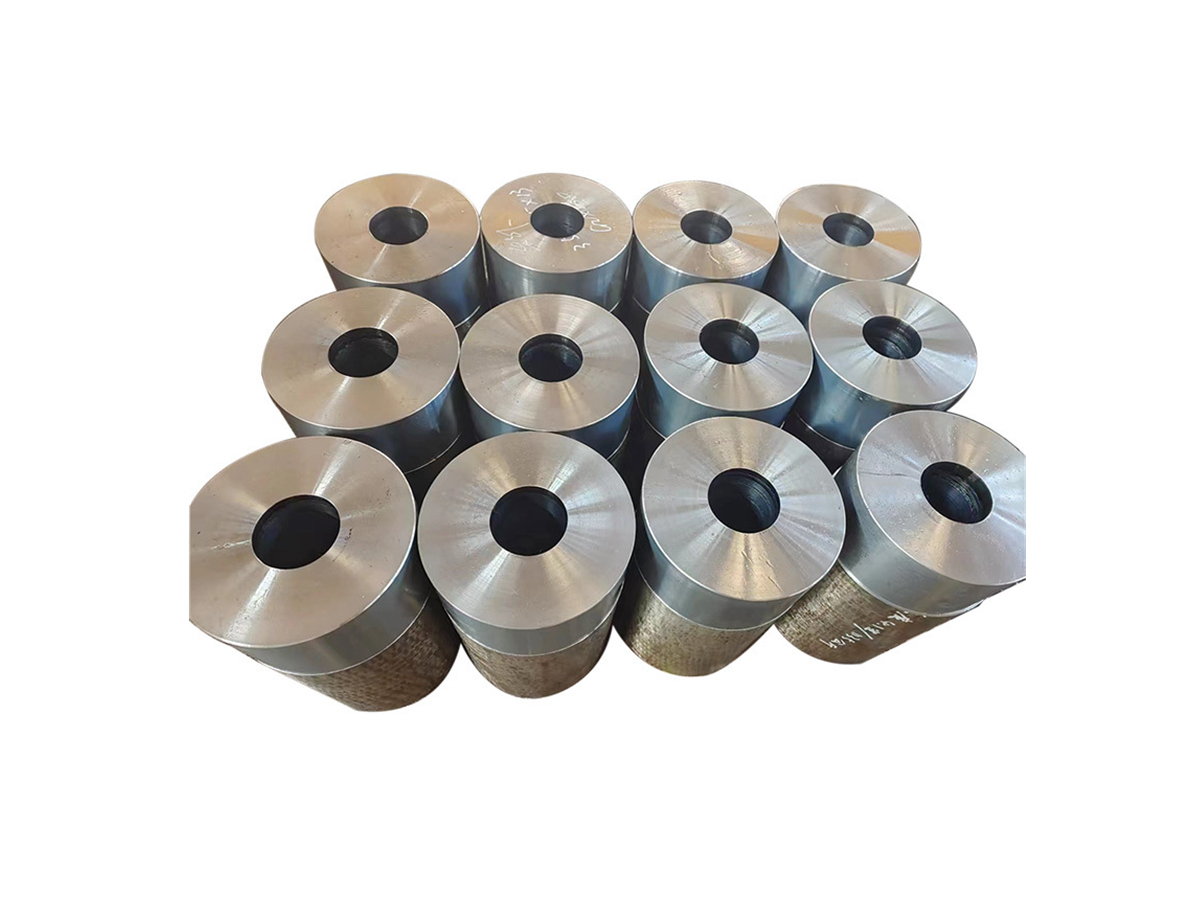
In industrial equipment, stainless steel is commonly used for components that require corrosion resistance, mechanical reliability, and stable service performance in wet, chemical, or contaminated environments. Many of these parts are not simple plates or housings. They include internal oil channels, coolant passages, long bore features, sensor access holes, hydraulic or pneumatic pathways, and internal alignment bores that must remain straight and dimensionally consistent over significant depth.
Standard drilling can work for shallow or moderate-depth holes, but once the hole becomes long relative to its diameter, process stability becomes much more important. Chip evacuation becomes harder, heat concentration increases, and straightness control becomes more difficult. In stainless steel, these problems can quickly lead to poor surface finish, taper, burr formation, or tool wear if the drilling method is not properly selected.
Typical Industrial Function | Why Deep Hole Drilling Is Needed |
|---|---|
Lubrication channel | Requires long internal passage with reliable flow continuity |
Coolant or fluid transfer path | Needs controlled diameter, straightness, and clean internal surface |
Hydraulic or pneumatic bore | Demands stable geometry and reduced burr risk at intersections |
Sensor access hole | May require long, narrow, accurately positioned drilling |
Weight-reduction internal bore | Needs long machining depth without compromising structural consistency |
Case Context: Industrial Equipment Component With a Long Stainless Steel Bore
A typical case in industrial equipment involves a stainless steel shaft-like or block-type component requiring one or more long axial or offset bores. The part may include external mounting features, side holes, threaded interfaces, sealing surfaces, and a deep internal channel that must align with other functional geometry. In this kind of project, the drilling process is not independent from the rest of the part. The hole must be produced in a way that supports later machining, assembly, cleaning, and inspection.
From a buyer’s perspective, the main concern is usually not just whether the hole can be drilled. The concern is whether it can be drilled efficiently and accurately enough to support the final equipment function. That includes hole straightness, depth consistency, burr control at intersecting holes, internal surface quality, and whether the process can be repeated across batches without unpredictable variation.
Why Efficiency Matters in Deep Hole Drilling Service
Efficiency in deep hole drilling is not only about drilling faster. In many industrial equipment projects, real efficiency means reducing instability, lowering scrap risk, shortening setup changes, and avoiding rework caused by hole deviation or poor internal quality. A process that appears fast in theory can become expensive if it creates inconsistent bores, excessive burrs, or downstream assembly issues.
For stainless steel parts, a stable drilling route often improves total efficiency more than a more aggressive but riskier cutting approach. When the hole is critical to the part’s function, buyers benefit more from a controlled and repeatable method than from nominal cycle time alone. That is especially true in custom orders where material cost, inspection effort, and delivery timing all matter.
Efficiency Factor | Why It Affects Project Cost |
|---|---|
Hole straightness stability | Reduces scrap and secondary correction work |
Chip evacuation control | Improves tool life and internal surface consistency |
Burr reduction | Reduces manual finishing and cleaning effort |
Stable setup strategy | Protects positional relationship with external features |
Repeatable inspection results | Supports smoother batch release and lower quality risk |
Accuracy Risks in Stainless Steel Deep Hole Drilling
Accuracy risk in stainless steel deep hole drilling usually comes from the combination of material behavior and geometry depth. Stainless steel can generate work hardening and heat concentration, which makes the drilling path more difficult to keep stable over a long distance. If the process is not well controlled, the bore may drift, taper, or show local internal damage that later affects fluid flow, sealing, or part-to-part consistency.
Another common issue is burr formation where deep bores intersect cross holes or emerge at sealing interfaces. Even if the main bore size is acceptable, secondary burrs can create assembly or flow problems. This is why deep hole drilling service should be planned together with the full part geometry, not treated as a separate isolated step.
Process Planning for Stainless Steel Deep Hole Parts
A reliable process plan for stainless steel deep hole parts usually starts with the full part function, not only with hole depth. The engineering review should consider the bore direction, entry condition, intersection with other holes, whether the part will later receive threading or sealing features, and how the hole will be inspected and cleaned after drilling. If the part also requires precise outer geometry, the drilling route should be coordinated with the broader precision machining sequence.
In many custom projects, the drilling strategy also depends on whether the part is a prototype, a low-volume order, or a repeat production item. For early-stage validation parts, the focus may be risk reduction and process confirmation. For repeat industrial equipment parts, the focus shifts toward process stability, cycle efficiency, and consistent batch output.
What Buyers Should Confirm Before Requesting a Quote
To evaluate a stainless steel deep hole drilling project accurately, buyers should provide more than just the outside shape of the part. The supplier needs enough information to understand the functional importance of the bore and how it interacts with the rest of the geometry.
Required RFQ Information | Why It Matters |
|---|---|
3D CAD file | Shows bore direction, intersecting features, and full part geometry |
2D drawing with tolerances | Defines diameter, depth, position, and related tolerances |
Stainless steel grade | Affects drilling strategy, tool wear, and process stability |
Quantity | Changes the balance between flexible setup and repeat efficiency |
Surface or cleanliness requirement | Helps define post-drilling cleaning and burr expectations |
Application function | Clarifies whether the bore is for flow, alignment, weight reduction, or assembly |
Inspection requirement | Determines whether additional dimensional or report support is needed |
For buyers comparing drilling options, it can also be useful to review broader routing questions through EDM Deep Hole Drilling Services – High Accuracy Custom Parts when the part includes difficult starting conditions or especially demanding hole features. But for many stainless steel industrial equipment components, the main decision is still how to execute the deep hole drilling service efficiently and consistently within the full machining route.
Inspection Points That Support Efficiency and Accuracy
Inspection in deep hole drilling service should confirm more than nominal diameter. For industrial equipment parts, the important questions usually include whether the bore depth is correct, whether the hole remains sufficiently straight for the intended function, whether intersecting areas are free from unacceptable burrs, and whether the relationship between the bore and external reference features remains within the project requirement.
When inspection is planned correctly, it improves both quality and delivery efficiency. It reduces the chance that downstream machining or assembly will discover a hidden drilling problem too late in the process. That is especially important in stainless steel projects where the cost of remanufacturing a failed part may be much higher than the cost of verifying the bore correctly the first time.
How Deep Hole Drilling Service Supports Industrial Equipment Projects
For industrial equipment components, deep hole drilling service is valuable because it supports internal functional geometry that general machining alone cannot always produce efficiently. It helps create long fluid paths, internal access features, controlled bores, and functional channels while maintaining the broader reliability expected from stainless steel equipment parts. When combined with stable process planning, this service helps reduce manufacturing risk in parts where internal geometry is just as important as external shape.
This is why many custom projects use deep hole drilling not as an isolated specialty step, but as part of a broader manufacturing route that may include CNC Machining, precision finishing, and inspection-based release. The drilling process becomes most valuable when it is integrated into the full part strategy rather than quoted only as a hole-making operation.
Request a Quote for Stainless Steel Deep Hole Drilling Parts
If your industrial equipment project includes long internal bores, fluid passages, or narrow stainless steel hole features that require better control than standard drilling can provide, deep hole drilling service may be the right route. The most efficient RFQ package usually includes the 3D model, 2D tolerances, stainless steel grade, quantity, functional description of the bore, and any inspection or cleanliness requirements.
For custom stainless steel parts where bore accuracy, internal quality, and repeatable delivery matter, a well-planned deep hole drilling service can improve both manufacturing efficiency and final part reliability.