Delrin (Acetal Homopolymer)
Material Introduction
Delrin (Acetal Homopolymer) is a high-performance engineering thermoplastic known for its low friction, high stiffness, good fatigue resistance, and excellent dimensional stability. Compared with many general-purpose plastics, Delrin is often selected for mechanically functional parts that must hold precise geometry while operating under sliding, rotating, or repetitive-load conditions.
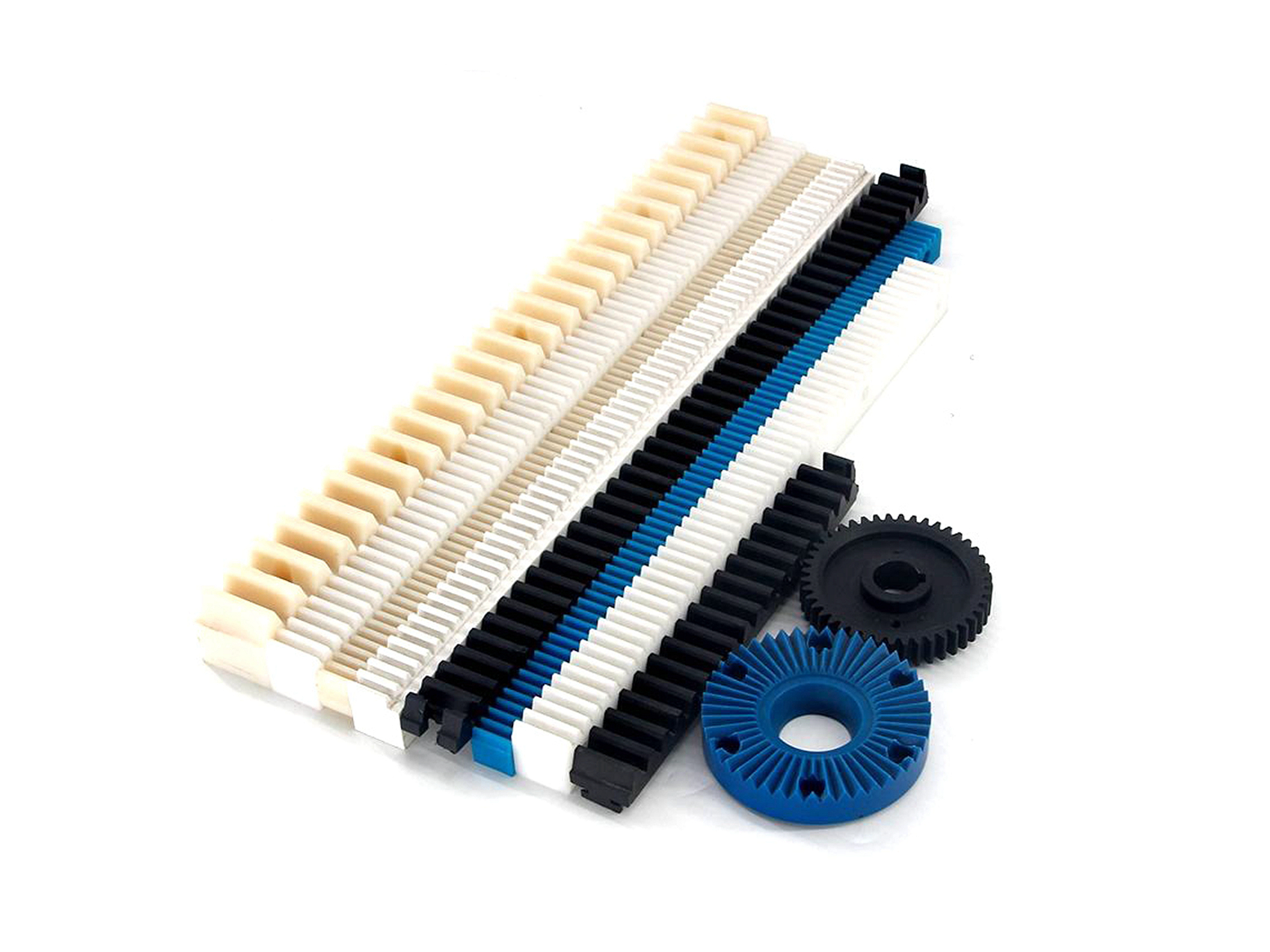
Delrin is especially suitable for CNC machined components such as gears, bushings, spacers, rollers, wear strips, fixtures, insulators, and precise assembly parts. It is commonly chosen when the design needs a cleaner-machining, lower-friction alternative to softer commodity plastics, and when lower moisture absorption and stronger dimensional predictability are more important than transparency or extreme heat resistance.
International Naming Table
Region / Standard | Naming / Designation |
|---|---|
Common Commercial Name | Delrin |
Generic Polymer Name | Acetal Homopolymer |
Abbreviation | POM-H |
Material Family | Polyoxymethylene (Acetal) Engineering Plastic |
Comparison Class | Precision low-friction engineering thermoplastic |
Typical Product Form | Rod, sheet, plate, machined components |
Alternative Material Options
Delrin is often selected for precision plastic parts that require low friction, good stiffness, and stable machining behavior. When an alternative is needed, the correct replacement should be chosen based on friction level, dimensional tolerance, chemical exposure, moisture sensitivity, impact requirement, and service temperature.
Potential alternatives may include Acetal copolymer, Nylon, UHMW, HDPE, PTFE, PEEK, or Polycarbonate depending on whether the part prioritizes sliding performance, toughness, chemical resistance, or higher thermal capability. For high-temperature engineering applications, PEEK or PEI may be more suitable. For softer low-friction wear surfaces, UHMW or PTFE may be more practical, while Nylon may be selected when toughness and wear resistance are both important.
Design Intent of Delrin
Delrin is designed for precision mechanical plastic parts that must operate reliably with low friction, good stiffness, and repeatable dimensional control. In many engineering applications, the material is selected because it can support accurate machined geometry while also reducing weight, corrosion risk, and maintenance needs compared with metal parts.
The design intent of Delrin is especially strong in sliding, rotating, and assembly-related parts. It is commonly used where the part must resist wear, maintain shape under moderate load, and perform well in automated movement or repeated cycles. Delrin is also useful when the design needs low moisture absorption and better dimensional predictability than Nylon in normal service environments.
Physical Properties
Property | Typical Reference |
|---|---|
Material Type | Acetal Homopolymer Engineering Plastic |
Density | Typically about 1.41 g/cm³ |
Water Absorption | Low compared with many other engineering plastics |
Thermal Conductivity | Low compared with metals |
Electrical Behavior | Good electrical insulation in many industrial uses |
Surface Behavior | Smooth, low-friction, suitable for machined functional surfaces |
Mechanical Properties
Property | Engineering Relevance |
|---|---|
Stiffness | Supports dimensional control and mechanical accuracy |
Wear Resistance | Useful for bushings, guides, and motion parts |
Friction Performance | Low friction for sliding and rotating contact surfaces |
Fatigue Resistance | Suitable for repeated motion and cyclic use |
Machinability | Excellent for precision CNC machining |
Dimensional Stability | Strong advantage in precision plastic part design |
Material Characteristics
Delrin is characterized by its combination of stiffness, low friction, easy machining, and good dimensional repeatability. It is one of the most practical engineering plastics for precision components that need clean edges, controlled tolerances, and stable behavior in dry or lightly loaded mechanical systems.
Compared with softer plastics such as HDPE or PP, Delrin provides better rigidity and wear performance. Compared with Nylon, it often offers lower moisture sensitivity and more predictable dimensional behavior in normal environments. Compared with high-end polymers such as PEEK, it is typically more economical when the application does not require extreme temperature resistance or highly specialized chemical performance.
Manufacturing Process Performance
Delrin performs very well in CNC machining and is commonly processed through CNC milling, turning, drilling, and boring. It usually machines cleanly with low burr formation and good edge quality when the tool geometry and cutting conditions are properly controlled. This makes it especially suitable for high-precision custom parts with slots, holes, shoulders, radii, and mating features.
Because Delrin is a thermoplastic, machining still requires attention to heat buildup, clamping force, and part deflection. However, compared with many softer or more heat-sensitive plastics, it provides a relatively stable production route for precision parts. For projects requiring moderate complexity and good repeatability, Delrin is one of the most production-friendly engineering plastics available.
Applicable Post-processing
Delrin parts may require deburring, cleaning, dimensional verification, and surface inspection depending on the final application. In most cases, the main post-machining concern is functional edge quality rather than decorative finishing, especially for parts that fit into moving mechanical assemblies.
For precision components, post-processing should focus on maintaining geometry, avoiding unnecessary heat exposure, and preserving the low-friction surface behavior of the material. If the part includes press-fit, bearing, or sliding functions, final verification of bore size, surface finish, and edge condition is often more important than cosmetic appearance.
Common Applications
Delrin is widely used in automation systems, industrial equipment, consumer products, robotics, and precision mechanical assemblies. Typical applications include gears, bushings, rollers, wear strips, guides, fixtures, spacers, insulators, housings, and custom parts that require accurate fit and smooth movement.
In these applications, Delrin is often selected because it offers a good combination of low friction, stable machining, and mechanical reliability without the weight and corrosion concerns of metal. It is especially useful where the part must move repeatedly, maintain a precise shape, and operate cleanly in dry or lightly lubricated environments.
When to Choose Delrin
Choose Delrin when the application requires a precision engineering plastic with low friction, good stiffness, low moisture absorption, and strong dimensional stability. It is especially suitable for machined mechanical parts, sliding elements, rotating supports, and accurate plastic components where softer polymers would deform too easily or absorb too much moisture.
If the application requires higher temperature resistance, stronger chemical resistance, or more extreme service capability, other materials such as PEEK, PTFE, or PEI may be more suitable. If the application requires better impact toughness or transparency, PC, ABS, or PMMA may be better choices. Delrin is the strongest option when the real priority is precise low-friction mechanical performance in a practical machining-friendly plastic.
Engineering Selection Note
Delrin should be selected according to the actual service condition rather than only by general plastic category. For RFQ evaluation, customers should provide the 2D drawing, 3D model, dimensional tolerance, load condition, friction or wear requirement, mating material, operating temperature, chemical exposure, and whether the part is for prototype or production use.
This allows NewayMachining to determine whether Delrin is the most suitable engineering plastic for the project and whether the part should be optimized for milling, turning, drilling, boring, or another precision plastic machining route.
Explore Related Blogs