How Should a Grinding Datum Be Transferred and Verified?
How Should a Grinding Datum Be Transferred and Verified?
A grinding datum should be transferred by defining the functional reference, locating it repeatably, controlling the contact sequence, and verifying the resulting relationship with a measurement method tied to the drawing. The datum used to hold a part is not automatically the datum that controls assembly. When grinding follows milling, turning, heat treatment, or coating, the buyer should document the before-and-after relationship and the state in which the feature is accepted. A secure fixture can still shift a positional relationship if the datum chain is assumed instead of demonstrated.
Name the Functional Reference
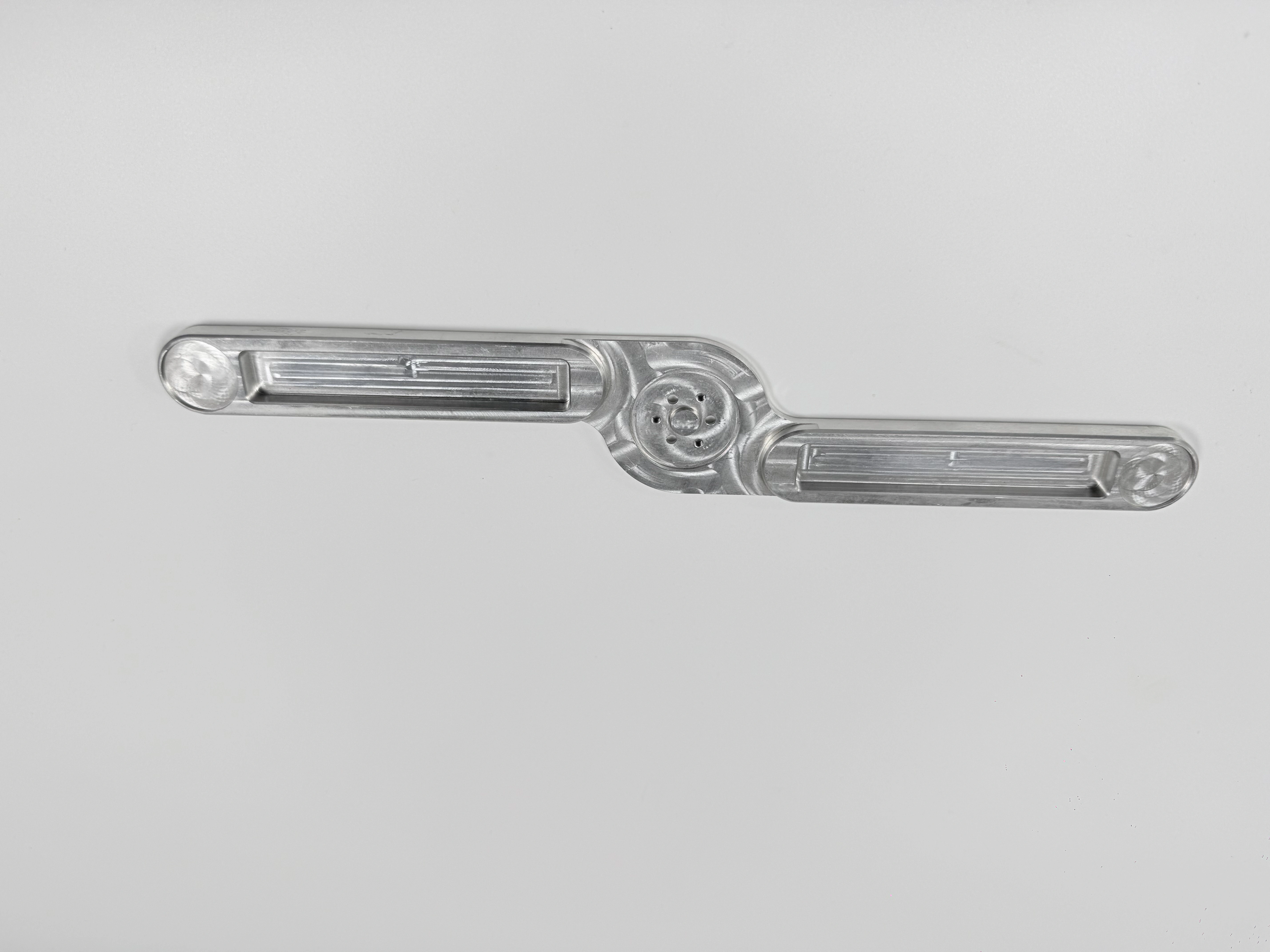
Identify the surface, axis, hole pattern, or interface that governs the part's function. State whether it is a primary, secondary, or tertiary reference and how the drawing establishes precedence. A broad face may orient a link arm, while a circular region may control a mating axis; a recessed channel may be a clearance feature rather than a datum. The decision belongs to the controlled drawing and design intent, not to whichever face is easiest to clamp.
Capture the Pre-Grind State
Measure the datum feature and dependent CTQs before grinding using a defined support condition. Record flatness, form, size, location, burrs, and damage where they can affect seating. State whether the part is free, restrained, thermally stabilized, or assembled during measurement. A thin or long geometry may relax when unclamped, so a pre-grind value under restraint cannot be compared directly with a free-state release value without an agreed method.
Control Contact and Clamp Sequence
Document which contact is established first, how secondary and tertiary contacts are loaded, and when clamps are tightened. Excessive clamp force can distort a flexible part; insufficient force can allow movement. Define support points, locator condition, contact cleanliness, and any compliant elements. If a replacement locator, shim, or soft jaw is installed, treat it as a process change until its effect on the datum chain is checked.
Choose a Transfer Method That Matches the CTQ
Use a gauge, height method, CMM alignment, probing routine, or other approved technique that can demonstrate the required relationship. Define the datum frame, alignment algorithm, contact points, probe qualification, and support state. A machine probe can locate a feature for machining while a CMM alignment can evaluate a different frame; neither result is meaningful if the frame is not stated. Keep setup confirmation separate from final acceptance.
Verify After Reorientation or Fixture Change
Run a transfer check after a new fixture, locator replacement, program revision, machine change, or reorientation. Record the setup date, fixture and program identifiers, unit sampled, contact sequence, and result. The sample should represent the geometry and state that matter; a flat calibration artifact cannot demonstrate how a flexible link arm seats. If a trend or outlier appears, hold the affected range and review whether the change began before or after the sample.
Define what happens when the transfer fails. The response may require reseating, fixture correction, expanded inspection, rework review, or an approved deviation. Preserve the failed result and the setup evidence. Repeating the same measurement without correcting the seating condition does not validate the datum. If the part is re-ground after a transfer issue, establish whether enough stock and geometric margin remain, then repeat all affected CTQs.
Map Datum Evidence to Buyer Questions
Use explicit boundaries: a seating photograph shows contact condition at one time; a locator qualification shows fixture readiness; a CMM report shows the stated alignment and result; a functional mating check shows behavior under its defined hardware and load. None automatically proves material condition, roughness, or long-term stability. Write the limitation beside the evidence so a reviewer does not overextend it.
Control Temperature and State
State part and room temperature, stabilization time, cleaning condition, and whether the part is restrained during transfer. Thermal gradients or residual coolant can change contact and measurement. If the delivered part is coated, assembled, or cleaned after grinding, define whether the datum is rechecked in that state. A datum that is valid before coating may shift in a way that matters to a seal or bearing interface.
When a transition changes the reference surface, preserve the old and new frames and identify the approved transformation. Do not overwrite a pre-process datum with a post-process result. If an outside processor returns the part with a different fixture mark or contact condition, quarantine the lot until the transfer and affected CTQs are reconciled. The record should make clear which owner accepted each state.
Specify Datum Transfer in the RFQ
Provide drawing revision, datum scheme, functional interfaces, pre-grind operation, material and state, feature access, support limits, orientation sequence, inspection method, temperature state, sampling, and required records. Ask the supplier to identify fixture contacts, clamp sequence, locator qualification, transfer checks, and reaction to a fixture change. Request an example format that shows unit identity and setup revision without disclosing unrelated customer information.
Ask which relationships are measured before grinding, after each reorientation, and at final release. Require notice before changing fixture, support, machine, program, probing routine, or alignment method. A supplier response that lists only machine travel or nominal repeatability does not demonstrate product datum control. Compare offers only after the datum chain, evidence ownership, and acceptance state are clear.
Buyer Action
Approve the route when the functional datum, locating sequence, state, transfer method, change reaction, and final evidence are explicit. Hold it when the fixture datum is merely convenient, the pre-grind state is unknown, or the measurement frame cannot be reconciled with the drawing. Datum transfer is proven by a traceable relationship on the actual part, not by a fixture claim or an unqualified coordinate.