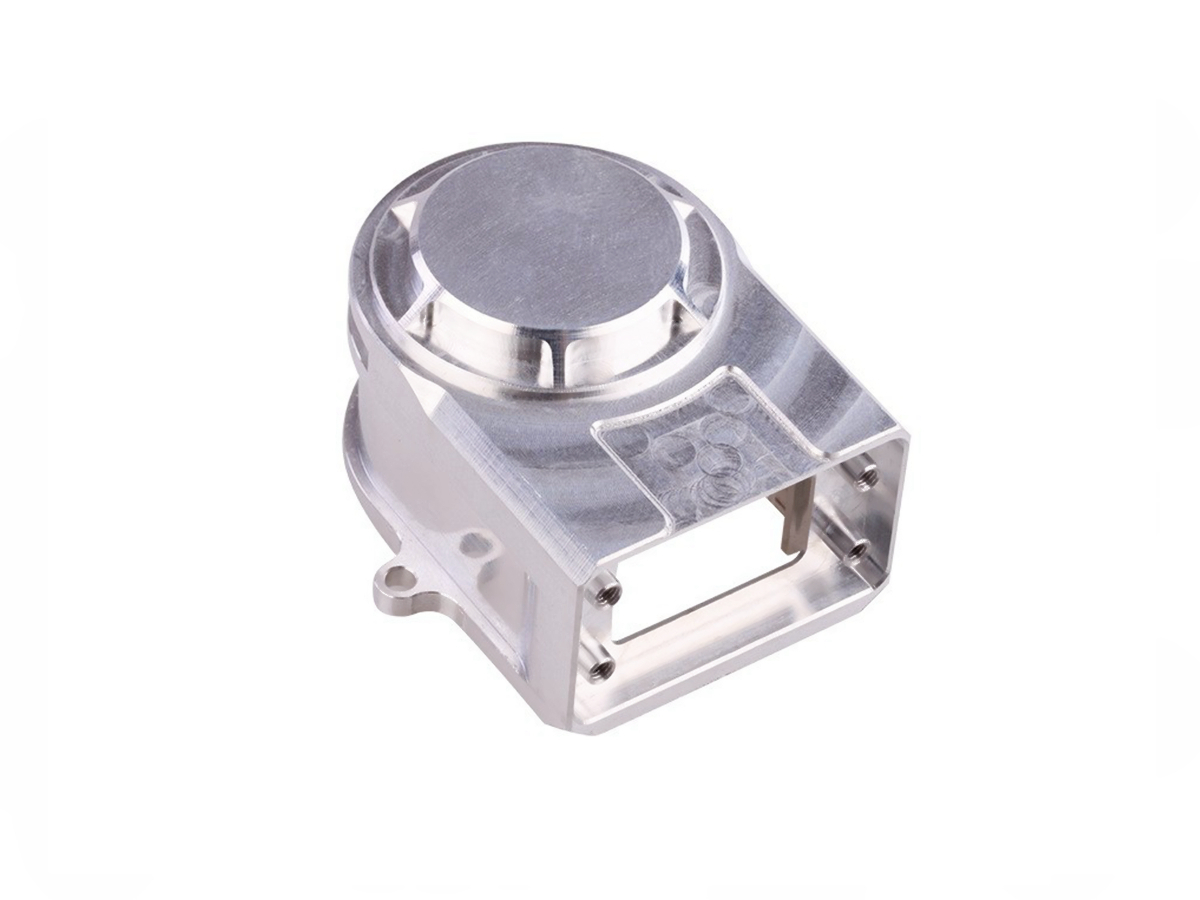
Durable Housings CNC Machined for Seamless Integration into Automation Equipment
Durable Housings CNC Machined for Seamless Integration into Automation Equipment
In automation systems, housings are not only protective shells. They often serve as structural interfaces that connect sensors, actuators, shafts, bearings, covers, ports, brackets, and mounting assemblies into one stable unit. That is why buyers looking for CNC Machining for housing components usually care less about simple outer shape and more about how accurately the housing supports final integration.
A well-machined housing must do several things at the same time. It may need to keep mounting faces flat, side holes aligned, internal cavities accessible, threaded features reliable, and mating surfaces stable across repeated production batches. For automation equipment, those details directly affect assembly speed, positioning accuracy, sealing performance, and long-term operational stability. That is why a dedicated housings CNC machining service is often more valuable than a general low-detail machining approach.
Why Housings Are Critical in Automation Equipment
Automation equipment housings are commonly used to hold and align functional components rather than simply cover them. Depending on the application, a housing may support linear motion hardware, sensor modules, pneumatic interfaces, gear mechanisms, connectors, protective covers, or electronic assemblies. In many cases, the housing also becomes the datum reference for the rest of the assembly.
Because of that role, housing quality must be judged by integration performance. Even if the part looks simple from the outside, poor control of mounting surfaces, cavity geometry, bore position, or threaded holes can create assembly difficulty later. This is especially important in Automation equipment where repeatable installation and stable alignment matter more than cosmetic shape alone.
Housing Function | Why It Matters in Automation Equipment |
|---|---|
Mounting interface | Keeps connected modules aligned and securely fixed |
Internal cavity support | Provides controlled space for sensors, electronics, or motion parts |
Side port or connector access | Supports tubing, wiring, airflow, or signal routing |
Protective enclosure | Improves durability against dust, handling, and industrial contact |
Assembly datum reference | Helps maintain the relationship between multiple components |
What Makes a Housing Suitable for Seamless Equipment Integration?
For seamless integration, a housing must be machined as a functional part, not just as a hollow body. Buyers should usually focus on the feature relationships that affect installation and use. These include mounting planes, threaded holes, bearing or shaft-related bores, sealing faces, cover interfaces, sensor windows, cavity depth, and side-entry ports. If these features are not controlled together, the housing may still be dimensionally acceptable in isolation but difficult to install in the full assembly.
This is why many custom housing projects benefit from precision machining logic even when the outer geometry is not extremely complex. The real issue is often not one tight dimension, but the relationship between multiple functional surfaces and interfaces that must fit into the automation system without adjustment.
Common Types of CNC Machined Housings for Automation Equipment
Automation equipment uses many different housing styles depending on system function. Some housings are compact and designed for sensors or instrumentation. Others are structural and used to support motion modules, brackets, actuator assemblies, or connector interfaces. Some need deep internal cavities, while others rely on multi-face machining for ports, bosses, counterbores, and mounting features.
Housing Type | Typical Machining Concerns |
|---|---|
Sensor housing | Small cavity accuracy, side ports, mounting hole location, cover fit |
Actuator housing | Bore alignment, mounting faces, threaded features, rigidity |
Control unit housing | Cavity machining, interface openings, sealing faces, fastener holes |
Pneumatic or fluid housing | Port position, sealing surfaces, burr control, passage consistency |
Structural equipment enclosure | Multi-face machining, stiffness, mounting pads, interface geometry |
Many of these parts also benefit from multi-axis machining when features are distributed across several faces or when angled ports and multiple interfaces must stay accurately related.
Materials Commonly Used for CNC Machined Housings
Material choice for machined housings depends on the equipment environment, load level, weight target, corrosion requirement, and finish expectations. Aluminum is often used when lightweight structure, good machinability, and attractive finishing are important. Stainless steel may be selected for corrosion resistance or harsher operating conditions. Engineering plastics may be used when electrical insulation, lower weight, or simplified handling is needed.
For many automation projects, Aluminum remains a strong first choice because it balances machinability, dimensional stability, and finishing flexibility. In environments requiring more corrosion resistance or stronger surface durability, Stainless Steel may be more suitable. Where non-metallic housing performance is preferred, Plastic machining may also be considered.
Manufacturing Risks in Custom Housing Machining Projects
Housing projects often look easier than they really are because the machining risk is spread across many moderate-detail features rather than one extremely difficult feature. Common risks include cavity distortion, misalignment between opposite faces, thread inconsistency, poor flatness on sealing or mounting areas, burrs in side ports, and tolerance stacking between outer datums and internal functional surfaces.
Thin walls can also create clamping sensitivity, especially on aluminum housings with larger internal pockets. Parts with multiple side holes or ports may require careful setup planning to keep the relationship between openings, threads, and cavity features stable. If the housing is part of a larger automation module, these risks can lead to assembly delay even when the part seems individually acceptable.
How Housings CNC Machining Service Supports Low-Volume and Production Projects
A dedicated housings CNC machining service should support both early-stage validation and repeatable supply. In prototype or pilot quantities, the focus is often on functional fit, access review, and DFM feedback. In repeated low-volume or ongoing orders, the focus shifts toward setup stability, surface consistency, and predictable assembly performance. This is where a supplier that can connect prototype learning with low-volume manufacturing becomes more valuable than a shop that only machines one-off samples.
For automation projects, housing supply often continues after engineering validation because the same equipment family needs spare units, pilot quantities, or market-stage production. A supplier that understands this transition can help reduce both technical and scheduling risk.
What Buyers Should Provide for a Housing Machining Quote
To quote a housing accurately, the supplier should understand more than the outside geometry. The RFQ should clearly show which faces are used for mounting, which bores or holes are critical, whether sealing areas exist, what finish is needed, and whether the housing is for prototype, validation, or repeated production.
Required RFQ Information | Why It Matters |
|---|---|
3D CAD file | Defines cavity geometry, port access, and machining scope |
2D drawing with tolerances | Clarifies mounting faces, threads, bores, and critical dimensions |
Material grade | Affects machining route, finish choice, and cost |
Quantity | Determines prototype, low-volume, or repeat supply strategy |
Surface finish requirement | Defines whether cosmetic or functional finishing is needed |
Assembly purpose | Helps prioritize the housing’s critical interfaces |
Inspection requirement | Determines whether dimensional reporting is needed for release |
Request a Quote for Custom CNC Machined Housings
If your project requires durable custom housings for automation equipment, the most effective RFQ usually includes the 3D file, 2D drawing, target material, quantity, finish requirement, and a brief description of the housing’s role in the assembly. That allows the machining route to be evaluated according to cavity access, port layout, mounting relationships, and integration risk instead of geometry alone.
For automation equipment parts where assembly fit, multi-face feature control, and repeatable housing quality matter, a focused housings CNC machining service can provide a more reliable path from sample validation to repeat supply.